ITAR and AI: can you input ITAR technical data into ChatGPT or Copilot?
Updated: November 2026
Can ITAR technical data be entered into ChatGPT?
It is highly risky. An AI installed on your premises prevents this data transfer.
ITAR, the U.S. regulation governing the trade of defense articles, also controls technical data: blueprints, processes, and manuals. Sending this information to an online AI service means entrusting it to a third party that reads it in plain text, on servers, and by staff you do not choose. An AI installed on your premises that can operate offline eliminates this transfer. It does not replace your existing authorizations.
Engineering firms, aerospace and defense subcontractors, and laboratories: many French companies receive American-origin data subject to ITAR. Teams want to translate, summarize, or search for specific requirements within these documents. AI performs these tasks exceptionally well. However, ITAR regulations do not stop at physical packages: technical data is "exported" the moment an unauthorized person can read it. Here is how to evaluate the risks, what a local AI changes, and what it does not.
What is ITAR?
ITAR (International Traffic in Arms Regulations) is the U.S. regulation governing the export of defense articles, defense services, and related technical data. It is enforced by the Department of State through its DDTC division, based on the USML (United States Munitions List). Its counterpart, the EAR, is managed by the Department of Commerce and targets dual-use goods.
These regulations apply to data even when it is in France. The French Ministry of the Armed Forces' fact sheet on U.S. regulations summarizes this: they have a broader scope than French and European rules and are based on extraterritorial legislation. Therefore, a French company that receives ITAR-controlled data must comply with the specific conditions of the authorization under which it was received.
| Regulation | Authority | Scope |
|---|---|---|
| ITAR (22 CFR, parts 120 to 130) | U.S. Department of State (DDTC) | USML defense articles and services, and their technical data |
| EAR (15 CFR, parts 730 to 774) | U.S. Department of Commerce (BIS) | U.S.-origin dual-use goods, software, and technologies |
| Regulation (EU) 2021/821 | In France, the Dual-Use Goods Service | Dual-use goods and technologies, including their electronic transmission outside the EU |
What is ITAR technical data?
It encompasses any information required to design, develop, manufacture, assemble, use, repair, test, maintain, or modify a defense article. Article 22 CFR 120.33 specifies plans, drawings, photos, instructions, and documents, as well as software directly related to a defense article.
Two exceptions apply: commonly taught scientific and technical principles, and information in the public domain. A marketing brochure describing a system's function is generally not considered technical data; however, its manufacturing files are.
Why do ChatGPT, Copilot, or online translators pose a risk?
Because an online service reads your data in plain text on its own servers, accessible by its teams and subcontractors. Regarding ITAR, this raises three critical questions, none of which can be answered by these services.
Who can access it? ITAR defines the "release" of technical data: the oral or written exchange with a foreign person, or allowing them to access it in plain text (22 CFR 120.56). Outside the United States, releasing data to a person of a different nationality than the country where the exchange occurs is considered a re-export, deemed to be made to all countries of which they hold citizenship or permanent residency (22 CFR 120.51). You do not know the nationalities or the access levels of an AI provider's teams.
Where is the data? Conversation history, logs, backups: an online service often keeps a record in countries you do not specify. ITAR specifically prohibits certain countries listed in Article 126.1.
Does your authorization allow it? ITAR data reaches a European subcontractor under a license or agreement that specifies who can receive it and for what purpose. An AI provider is almost never included in these agreements.
Is end-to-end encryption not enough?
For storing or transmitting files, it might be enough; for running an AI, it is not. Since 2020, ITAR provides that sending or storing technical data is not considered an export if it is (22 CFR 120.54):
- not classified;
- encrypted end-to-end, using modules compliant with FIPS 140-2 or higher, or with a strength of at least AES-128;
- neither stored nor intentionally sent to a country prohibited by Article 126.1, nor sent from such a country.
The text specifies that "end-to-end" means: the data is never in cleartext between the sender and the authorized recipient, and decryption keys are not provided to any third party. However, an AI service must read your text to respond. It therefore holds the means to decrypt it. In our view, this exception covers encrypted storage, not processing by an online AI. The EAR contains a similar rule (15 CFR 734.18).
| Usage | Data accessible by third parties? | Cautious reading |
|---|---|---|
| Storage of encrypted files, keys held by you | No | May fall under the 120.54 exception, provided all conditions are met |
| Encrypted transmission between authorized persons | No | Same reasoning |
| Online AI Assistant (ChatGPT, Copilot, Gemini…) | Yes, to respond | Outside the exception: transfer to a third party to be analyzed, authorization to be verified |
| Online translator or proofreader | Yes | Same situation as the AI assistant |
| IA locale installed on-site | No, no data leaves your premises | No transfer to a third party; internal access remains to be addressed |
What does a local AI change?
It removes the third party. The AI model is a file, downloaded once, which runs on a machine in your premises. Your documents never leave your network, and the system can function without any internet connection. Updates, if you choose to have them, are delivered via a procedure you validate, for example on a controlled medium.
Current open models can translate, summarize, and retrieve specific information from long documents with sufficient quality for professional use, provided a human review is performed. Our machines are standard commercial hardware: it is not the hardware that falls under ITAR regulations, but the data you input into it. To compare this with services hosted in Europe by American groups, read our article on the Cloud Act and European cloud.
The internal trap: who can query the machine?
A local AI does not solve the personnel issue; it simply moves the responsibility to your premises. If the machine indexes all your documents, an employee could obtain the contents of an ITAR-restricted folder simply by asking a question. For ITAR, nationality matters: showing technical data to a person not covered by your authorization can constitute a re-export or re-transfer (22 CFR 120.51 and 120.52), even within your own walls.
With Open WebUI, the interface we install, document databases can be restricted to specific groups, and accounts can be linked to your directory. You can find more details in our complete Open WebUI guide.
The same logic applies to maintenance: if an external contractor needs to access a machine containing ITAR data, whether on-site or remotely, your export manager must determine who is authorized to do so. We install and test the machine before your data is uploaded.
What are the use cases for ITAR data?
These are tasks that save time on documentation while maintaining systematic human review. Here are a few examples:
| Use Case | What the AI does | What remains human |
|---|---|---|
| Translating a manual or specification | Initial translation, consistent terminology across documents | Technical review, validation |
| Locating a requirement | Searching through hundreds of pages and quoting the relevant passage | Interpretation, decision-making |
| Summarizing a test report | Structured summary, identifying out-of-tolerance points | Root cause analysis, conclusions |
| Preparing a response to a tender | Drafting the framework, reusing previous responses | Commitments, pricing |
| Comparing two revisions of a document | List of text changes | Manufacturing impact |
AI does not classify your data (USML, EAR, or European dual-use) nor does it determine if a specific use is permitted: this decision lies solely with your export control officer.
"ITAR free": what does it mean?
This is a commercial term, not a legal category. It refers to a product designed without any components or data subject to ITAR, ensuring its export does not require U.S. authorization. This is different from the topic of this article: while an "ITAR free" product avoids export restrictions, a local AI is used to process ITAR data already in your possession without transmitting it to a third party.
Which machine for ITAR data?
The right choice depends on the number of concurrent users, the size of your documents, and your requirements for data isolation. For separate projects, several small machines are often more effective than one large one. Capacities: these are estimates and do not include speed measurements.
| Machine | Target Audience | Concurrent Users (estimate) | Price excl. VAT |
|---|---|---|---|
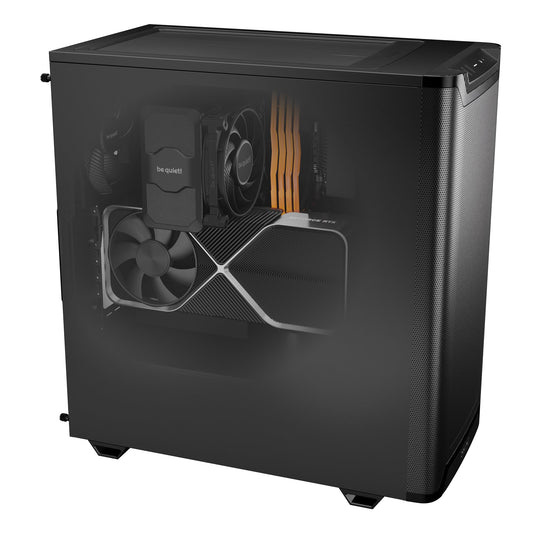
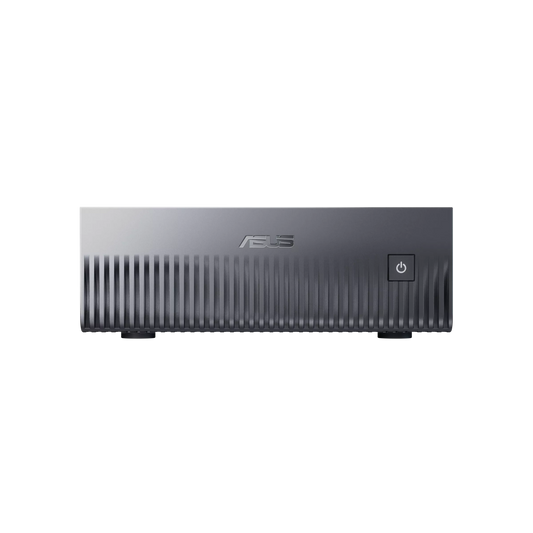
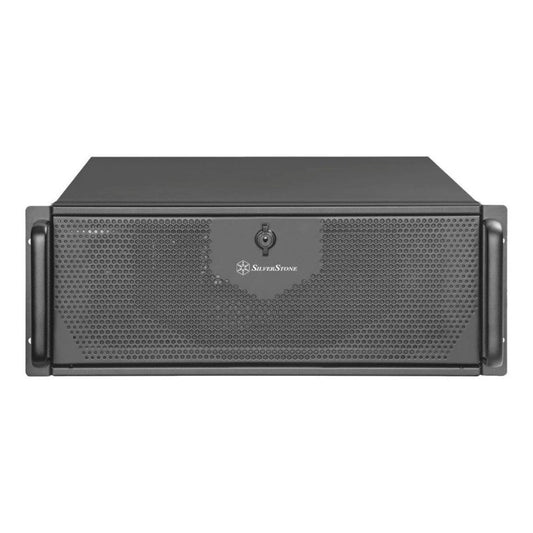
| CoreIA GB10 | Small team on a single project: compact chassis, 128 GB of memory, easy to place in a secure area | 1 to 4 | live price |
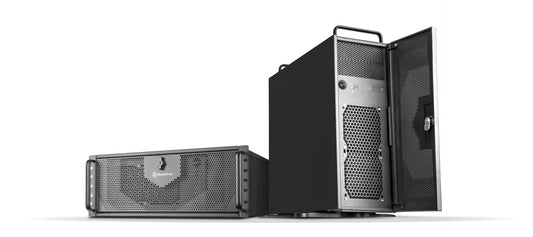
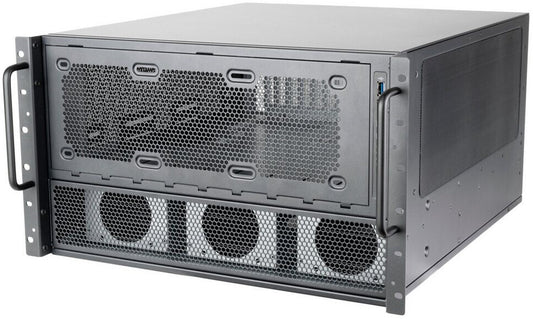
| Serveur IA PME EPYC 4005 | Technical service or documentation: ECC memory, remote management, text processing, and document research | 1 to 15 | live price |
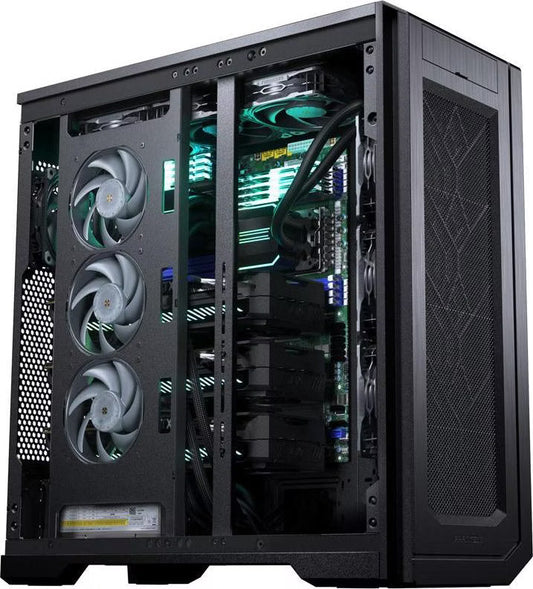
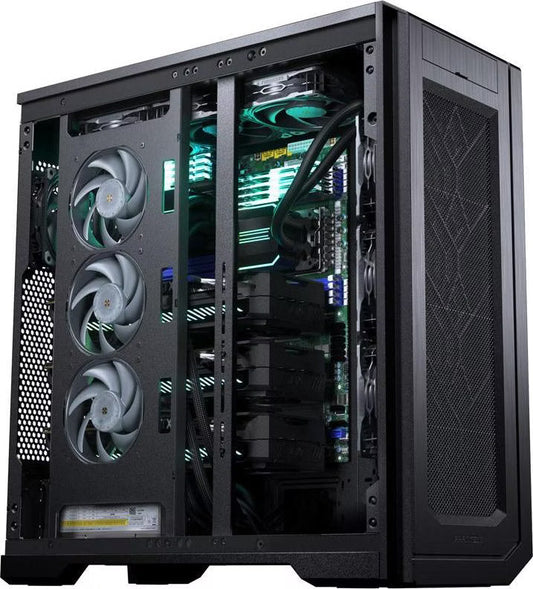
| CoreIA RTX PRO 6000 | Design office: large models, long documents, reading of plans and diagrams | 8 to 15 | live price |
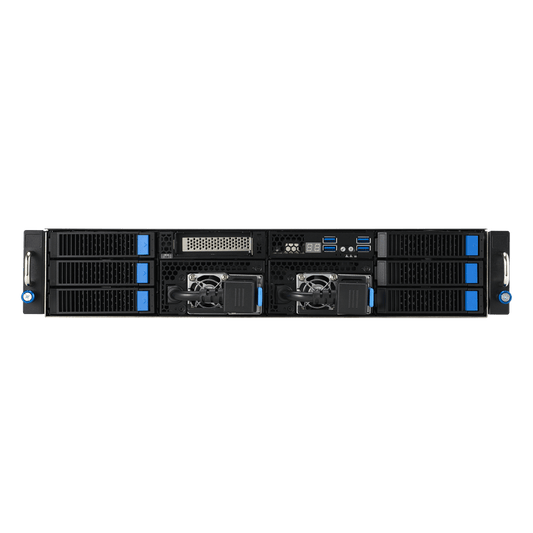
| CoreIA 2x RTX PRO 6000 | Multiple departments or several programs on a single rack-mounted machine | 20 to 35 | live price |
Base configuration prices, updated live. Capacities: Radiance Systems estimates, which vary depending on the model and document length.
For the total budget, see the cost of a local AI server, and for sizing, how many users per GPU.


What we do in practice
At Radiance Systems, a local AI specialist integrator based in Auriol (Bouches-du-Rhône), we assemble the hardware, install the models and interface, and configure the system according to your specific requirements: offline operation, separate document databases per program, accounts and groups linked to your directory, and access logs. We deliver a ready-to-use machine before your data ever enters the system, and we can develop custom tools, such as a translation tool for your manuals using your specific terminology.
Hardware and software from a single point of contact. Machines are delivered within a maximum of 15 working days, often sooner, followed by shipping; 2-year warranty; 6/7 assistance. On-site installation is available upon quote.
Your technical data stays with you
Describe your constraints (software, network, authorized personnel): we provide you with a machine and a configuration without promising compliance we cannot guarantee. Response within 24 hours, free quote.
Frequently Asked Questions
Can ChatGPT be used with ITAR data?
We advise against it without written approval from your export control officer. The service reads data in plain text on its servers, using staff you do not select, which may constitute an unauthorized export, re-export, or re-transfer. An AI installed on your premises avoids this transfer.
Does end-to-end encryption make the cloud acceptable?
To store or transmit files, 22 CFR 120.54 provides that an end-to-end encrypted transmission, under certain conditions, is not an export. However, an AI must read the text in plain text to respond: in our view, this exception does not cover processing by an online AI service.
Are summaries or translations performed by AI still considered ITAR data?
Based on our interpretation, yes, as soon as they access information necessary for the design, manufacture, use, or maintenance of a defense article. The ITAR definition focuses on the information itself, not its format.
Does local AI ensure ITAR compliance?
No. It eliminates the transfer to a third party, which simplifies the analysis. Compliance depends on your licenses and agreements, the list of authorized personnel, and your internal procedures. We do not guarantee compliance.
Can a foreign employee use the machine?
This depends on your authorization. Showing ITAR technical data to a person of a non-covered nationality may constitute a re-export or re-transfer, even within your premises. On the machine, documents are separated by user groups to track the list established by your export manager.
Can the machine operate without internet?
Yes. Once installed, it functions without any external connection. It can be placed on an isolated network, with updates provided according to a procedure that you approve.
Sources
- 22 CFR 120.33, definition of technical data (official text reproduced by the Legal Information Institute, Cornell)
- 22 CFR 120.50, definition of export
- 22 CFR 120.51, re-export
- 22 CFR 120.52, retransfer
- 22 CFR 120.54, activities not subject to export controls (end-to-end encrypted data)
- 22 CFR 120.56, release of technical data
- 22 CFR 127.10, civil penalties
- 15 CFR 734.18, equivalent EAR rule
- Ministry of the Armed Forces (DGA), SME Fact Sheet "U.S. Export Control Regulations"
- U.S. Department of State, DDTC portal
- EUR-Lex, Regulation (EU) 2021/821 on dual-use items
- ANSSI, security recommendations for a generative AI system (April 2024)
Number of people: estimates by Radiance Systems, excluding speed measurements. This summary does not constitute legal advice or export control advice: only your export control officer or your legal counsel can determine if a specific process is authorized.
Let’s talk about your local AI project
By phone or video call, we look at what you need together. You leave with a clear recommendation, with no commitment.
- The AI computer or server that fits your use and your team
- What we should develop for you, if needed: automations, applications, search in your documents
- Budget and lead times, with a quote within 24 hours
Calls in English, French or Dutch.
You are booked!