Cloud Act: Does a European cloud operated by an American company protect your data?
Updated: November 2026
Does a server in Europe protect you from the CLOUD Act?
Not if its operator is American.
The CLOUD Act follows the company that controls the data, not the country where the server is located. A US cloud service hosted in Paris or Frankfurt is therefore still subject to it. Three solutions exist: a European operator, a SecNumCloud-certified offering, or an AI running on your premises.
Most companies think they solve the problem by choosing a "European region". This is useful for the GDPR, but it does not address the CLOUD Act. Here is what the law actually says, what was said under oath in the Senate, and how to choose based on your data.
What the CLOUD Act says
The CLOUD Act was adopted in March 2018. It requires providers subject to US law to hand over data in their possession, custody, or control when ordered by US courts, whether that data is stored in the United States or elsewhere (18 U.S.C. § 2713). It also provides for bilateral agreements between states, and a remedy for the provider before a judge in certain cases.
The server's country is therefore not the right criterion. The real question is: who can technically and legally access your data?
What Microsoft France told the Senate
On June 10, 2025, Anton Carniaux, Director of Public Affairs and Legal at Microsoft France, was examined under oath by the Senate Committee of Inquiry on Public Procurement. The rapporteur asked him if he could guarantee that the data of French citizens entrusted to Microsoft via UGAP would never be transferred under a US warrant without the consent of the French authorities.
His answer: "No, I cannot guarantee that". He added that this had never happened yet.
The five situations, from most exposed to least exposed
| Situation | Exposure to the CLOUD Act | For what data |
|---|---|---|
| US provider, servers in the United States | Yes | Non-sensitive data |
| US provider, European region | Yes, the operator remains American | Common data, if the contract is suitable |
| “Trust” offering: company under French law, licensed American technology | Reduced, depending on the actual isolation | Sensitive data, after verification |
| SecNumCloud-certified European operator | Very reduced, this is the purpose of the certification | Sensitive and regulated data |
| Local AI, on your machine | No provider to compel | Professional secrecy, healthcare, R&D, HR |
Bleu, S3NS: where do we stand?
Bleu (Orange and Capgemini, Microsoft technology) and S3NS (Thales, Google technology) are companies under French law designed to isolate data management. According to the most recent public information we have read, S3NS obtained its SecNumCloud certification in late 2025 and Bleu's application remained under review in October 2026. These statuses are evolving: always check the official ANSSI list before deciding.
Three misconceptions
"My data is encrypted, so I'm safe"
It depends on who keeps the keys. If the provider holds them, they can be compelled to decrypt. Encryption really protects when you alone keep the keys.
"A French subsidiary protects me"
A subsidiary may be subject to the control of its American parent company. What matters is effective control, not the headquarters address in France.
"A local AI solves everything"
It removes the cloud provider from the equation, not everything else. Your machine remains subject to French law, and you must secure it: access, backups, updates.
For AI, the issue is even more sensitive
An AI receives the entire text of your documents: contracts, reports, medical records, plans. It is more than what you would put in simple file storage, and this content passes through the model in plain text when responding. The online service therefore necessarily processes it, even if its storage is encrypted.
On a machine installed at your premises, the text remains with you from start to finish.


How to choose
| Your data | Our advice |
|---|---|
| Marketing, public content, tasks without personal data | An online service is suitable. We can also automate online. |
| Common customer data | European operator, or local AI if the volume justifies it. |
| Professional secrecy: lawyers, notaries, accountants, doctors | Local AI. See our lawyers and doctors pages. |
| R&D, plans, calls for tenders, HR data | Local AI, or SecNumCloud offering. |
To compare costs, read our article Local AI or ChatGPT Enterprise and Copilot.
Keep your data at home
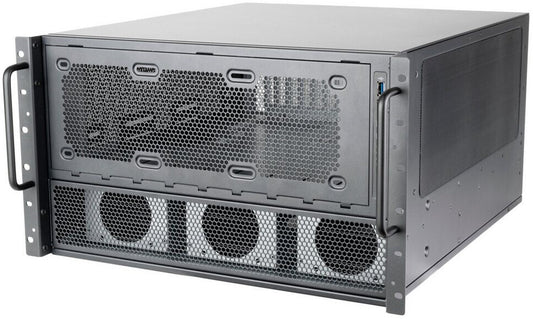
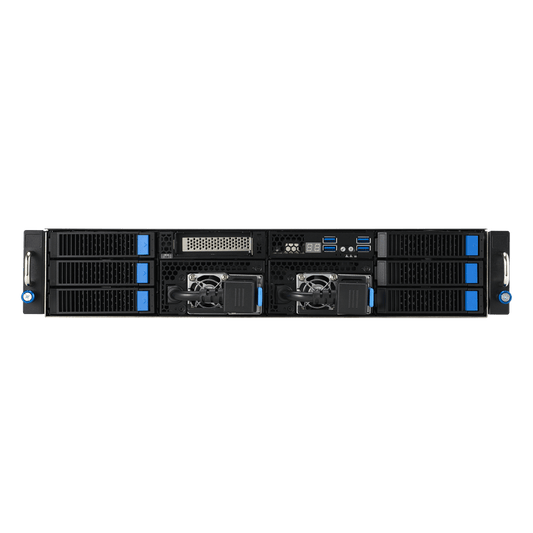
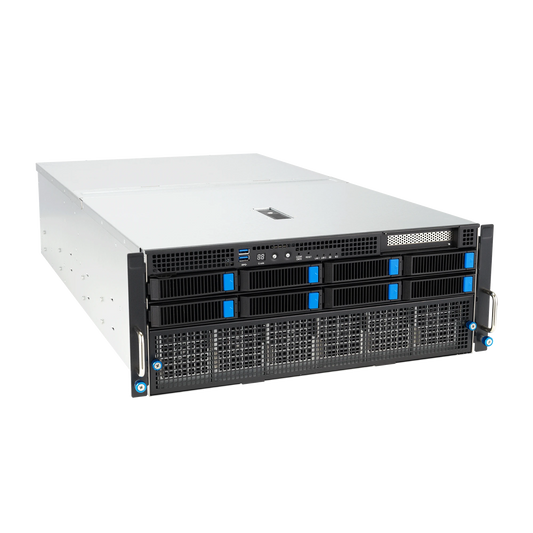
We assemble the machine in Auriol and install the AI on it, with your tools. Hardware and software, a single point of contact. Free quote.
Frequently asked questions
Does the CLOUD Act apply to data hosted in Europe?
Yes, if it is in the possession, custody, or control of a provider subject to US law. The server's location is not enough to exclude it.
What did Microsoft France tell the Senate about the CLOUD Act?
On June 10, 2025, under oath, Anton Carniaux answered that he could not guarantee that French citizens' data would never be transferred under a US warrant without the consent of the French authorities. He added that this had never happened yet.
Is a European cloud operated by an American company protected?
No, not necessarily. If the American company retains control, the CLOUD Act may apply. French law offerings like Bleu or S3NS seek to isolate this control. Check their SecNumCloud certification on the ANSSI list.
Does encryption protect against the CLOUD Act?
Only if you alone hold the keys. For an online AI, the text must anyway be readable by the model at the time of processing.
Is a local AI subject to the CLOUD Act?
If the machine belongs to you and the AI runs at your premises, without a US service to process your data, there is no provider to whom such a warrant can be addressed. The machine remains subject to French law, and you must secure it.
Is the risk real for an SME?
A request targeting an SME remains unlikely. The question is above all contractual and professional: can you promise your clients that their data does not leave your control? For professional secrecy, the answer matters.
Sources: Senate, hearing of Microsoft France, June 10, 2025; US Department of Justice, CLOUD Act; Shattered, status of SecNumCloud certifications, October 2026. SecNumCloud statuses cited from secondary sources: the official ANSSI list is authoritative. Summary without legal advice value.