Local AI for lawyers: contract and case law analysis without the cloud

8:30 AM, an ordinary Tuesday at a law firm. The commercial litigation partner arrives with a 47-page contract under her arm that a client signed the day before without reviewing it. She needs to find the flaw before noon. Here's how the morning unfolds, with AI installed in the firm.
None of this morning's activities — neither the contract, nor the question, nor the indexed case law — left the firm's machine. No American server, no cloud provider, no hypothetical trusted third party. AI that the partner fully controls, on a computer she owns.
Pasting a client contract into ChatGPT means transmitting it to a third party. Professional secrecy is not a clause to negotiate with OpenAI.
What Professional Secrecy Says

A Reminder of the Framework
Article 66-5 of the Law of December 31, 1971 states that consultations, correspondence, and case files of a lawyer are covered by professional secrecy. The National Internal Regulations (RIN) confirm this and extend it to processing methods.
This means very concretely: the content of a client contract, a pleading brief, a document from a file, cannot be transmitted to a third party without specific oversight. An online AI service, often located outside Europe, whose general terms and conditions do not provide anything specific for the legal profession, is a third party. The fact that "the API says it doesn't store" does not change the nature of the transmission.
This is why local AI is not just a comfortable option for a lawyer: it is the natural extension of the very principle of secrecy. The data remains in the firm. It is not entrusted to anyone.
The National Bar Council has also repeatedly warned about the uses of generative AI tools in firms, without ever prohibiting the tool itself — but by reminding that the handling of client data remains subject to the same rules as everything else. GDPR compliance is added, without replacing it.
Some bar associations have even specified, in local recommendations, that an online generative AI service should not be fed with identifiable client or case data. Local AI meets this requirement at the root: no identifiable data, nor non-identifiable data for that matter, leaves the firm's premises.
Three Uses That Save Half a Day Per Week

A firm accumulates thousands of pages: contracts, deeds, decisions, internal memos. Local AI makes this mass searchable.
The timeline above was just one example. Here are three other scenarios that local AI concretely changes in the firm.
Summarizing a Voluminous File
Twenty documents, eight opposing conclusions, three expert reports. A new associate needs to get up to speed in one day. Local AI helps him: it produces a factual timeline, identifies points of disagreement, and extracts each party's requests. The associate leaves with a summary memo and a case map, and can spend his day thinking rather than reading.
The gain is not just time. It is also the certainty that no key element will be overlooked. AI reads everything, tirelessly, and highlights salient points. The human makes the final decision.
Searching the Firm's Case Law Database
A firm accumulates thousands of landmark decisions, internal notes, doctrine memos. Querying all this in natural language, without relying on an external engine that would see every sensitive query pass through, is the most discreet and useful contribution of local AI. This is called RAG — for Retrieval-Augmented Generation. In practice, you upload your documents, they are indexed once, and you then query them in plain French.
"Have we ever litigated a three-year non-compete clause in Belgian labor law?" In a few seconds, the AI retrieves the internal memo written four years ago, the cited decision, and a reminder of the arguments used at the time. Firm knowledge that, without indexing, would have been buried in a Windows directory structure.

Your documents indexed locally, searchable from any workstation in the firm — without ever leaving your network.
Assisted Drafting of Recurring Documents
Summons, standard conclusions, formal demand letters. AI reproduces a style, reuses validated passages, and suggests variations. The lawyer retains control over every word, but the first draft arrives in a few minutes instead of an hour.
Important point: local AI can be trained by example, without technical fine-tuning, simply by giving it access to a folder of models validated by the firm. It then imitates the firm's style, without these models ever being shared.
Local AI does not replace the lawyer. It frees the lawyer from mechanical reading, so that they can dedicate their time to analysis and advice.
What the Machine Needs to Do
The Right Configuration for a Firm
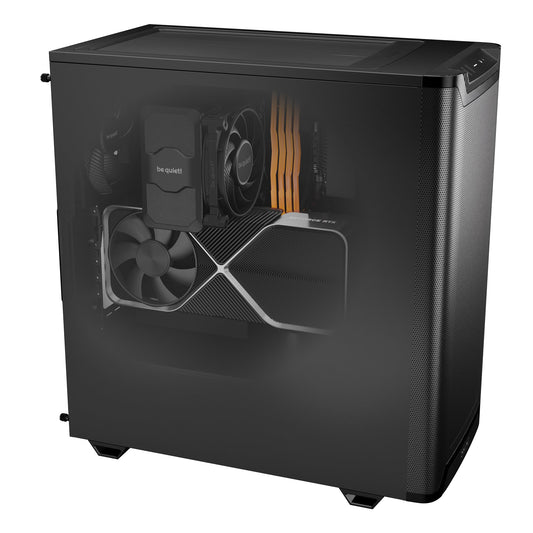
A serious language model, capable of reasoning on long and complex legal texts, requires about 16 GB of video memory. This is the envelope of our CoreAI 16 (starting from €1,703), sized for individual use — a partner, an associate — with light document RAG.
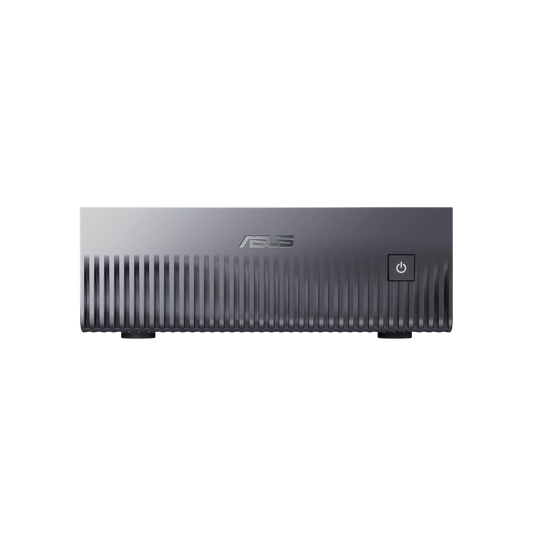
For a firm that intensively queries a case law database, or to share AI with an entire team via the firm's network, we move to the NVIDIA GB10 mini-server (starting from €3,999): 128 GB of unified memory, quiet, compact, designed to stay on continuously at the firm.
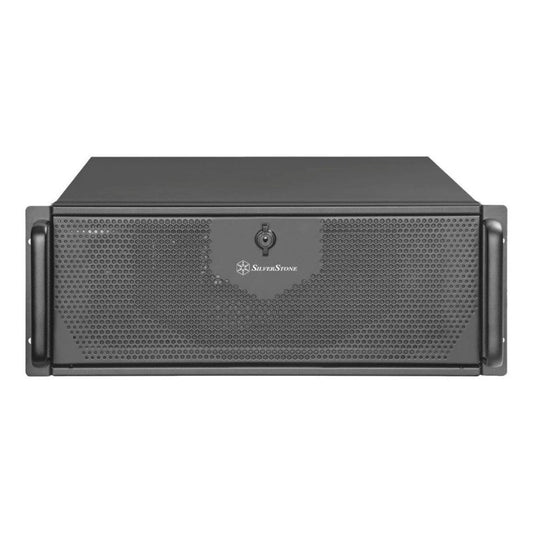
For larger firms or the most demanding analytical needs — long decisions, international case law, multi-jurisdictional comparisons — the CoreAI 64 with RTX 5090 (starting from €6,042) runs 70 billion parameter models for the best quality available locally.
All these machines are hand-assembled in Auriol (13390), Provence, fully configurable via the online configurator or by quote (contact@radiancesystems.eu), and delivered with the ready-to-use environment: browser-accessible chat interface, downloaded models, and — upon request — indexing of your own documents (standard contracts, case law, internal doctrine) for immediate use. On-site installation is possible throughout France and Europe, with training on getting started for the firm's team.
The three flagship configurations
 CoreAI 16 — RTX 5060 Ti 16 GBOne lawyer, one workstation. 14B models, light RAG on your contracts. €1,703
  NVIDIA GB10 AI Mini ServerThe firm's server, shared by the whole team, 128 GB unified. €3,999 CoreAI 64 — RTX 5090 32 GB70B models for the finest analysis, demanding firms. €6,042
Three Things a Lawyer Should Know
Getting Started: Practical Advice
- Start with your most frequent uses. Case summarization, recurring drafting, or database research — no need to do everything at once. One well-integrated use is better than ten superficial ones.
- First index your internal templates. Standard contracts, landmark conclusions, doctrine notes: these are the documents that will make AI most useful to the firm's style.
- Train the entire team, not just the partners. Associates and assistants are often the ones who save the most time on repetitive tasks.
- Maintain human validation as an absolute rule. No memo, no document, no advice leaves the firm without being reviewed by a lawyer. This is the line that distinguishes a tool from an autopilot.
- Keep your GDPR register up to date. Local AI significantly simplifies compliance — no subcontractor to contract with — but the processing of personal data remains subject to the register.
Radiance Systems supports law firms from configuration selection to hands-on training. Upon request, on-site installation is possible anywhere in France and Europe, with technical support in French, English, and Dutch, within 3 business hours. Contact: contact@radiancesystems.eu.