Local AI Server for Businesses: Multi-user LLM, Cost, and Sizing
Twenty employees on a cloud AI subscription already amounts to several thousand euros per year, not to mention that every prompt, every document pasted, goes to a third-party server. A local AI server changes the equation: a single investment, the whole team connected to it, and no data leaving the company.
This guide is for IT decision-makers and executives considering deploying a shared LLM internally: the real cost compared to the cloud, technical criteria for multi-user operation, how to size it according to headcount, and the deployment checklist.
The problem of cloud at team scale
An individual AI subscription seems harmless. Multiplied by the number of employees, it is no longer so.
Cloud subscription, per user
Billed continuously, as long as the account exists. The cost grows with each new hire. Data transits through the provider's servers.
Local AI server
The whole team connected to the same machine via the network. No added cost per user, no data leaving the company.
What a multi-user local AI server is
It's a single machine, sized for computational power, installed on your network. Each employee accesses it from their workstation via a web interface, just as they would with a cloud tool, except that the request never leaves your premises.
The principle changes everything at scale: instead of paying a license per person, you pay for infrastructure once, sized for your team's actual usage.
Technical criteria specific to multi-user operation
A shared server does not have the same constraints as an individual workstation. Here's what really matters.
- Concurrent requests. Several people query the model at the same time. The server must process these requests in parallel without anyone having to wait their turn, which requires available VRAM beyond the model's weight alone.
- Throughput, not just capacity. A model that responds quickly for a single user can slow down significantly with five or ten simultaneous requests. The GPU's memory bandwidth is the factor that determines this throughput.
- Account management. Each collaborator must have their own space, history, and access. An interface like Open WebUI natively manages separate accounts on the same server.
- Continuous availability. A team server must remain on and reachable during business hours, with stability designed for prolonged operation, not for occasional sessions.
- Growth margin. Headcount or usage rarely decreases. Planning for a VRAM and RAM margin avoids premature replacement.
Which server for which headcount
The table below provides a rough estimate. Actual usage (conversation length, RAG for documents, code generation) will vary these benchmarks.
| Connected users | Recommended VRAM | Reference machine | Equivalent cloud cost (indicative, per year) |
|---|---|---|---|
| Up to 10 users | 16 to 32 GB | CoreAI 64 (RTX 5090) | around €3,000 |
| 10 to 25 users | 64 to 96 GB | Mini Server GB10 or Rack 2 × RTX 5090 | around €6,000 to €9,000 |
| 25 to 50 users | 96 GB ECC | Pro AI Ultra Threadripper | around €9,000 to €18,000 |
| 50 to 100 users and more | 192 GB ECC | Rack 2 × RTX 6000 Blackwell | around €18,000 to €36,000 |
Deployment checklist
- Authentication enabled from commissioning, individual accounts for each employee.
- Network access restricted to the internal network or via VPN, never open to the internet without control.
- HTTPS to encrypt exchanges between workstations and the server.
- Regular backups of conversations and indexed documents if RAG is used.
- Load monitoring to anticipate an increase in headcount before it degrades response times.
- Scheduled updates of the inference engine and interface, without interrupting activity.
Our servers for multi-user LLMs
All these machines are hand-assembled in Auriol (13390) and fully configurable, via the online configurator or on quote for a specific need.
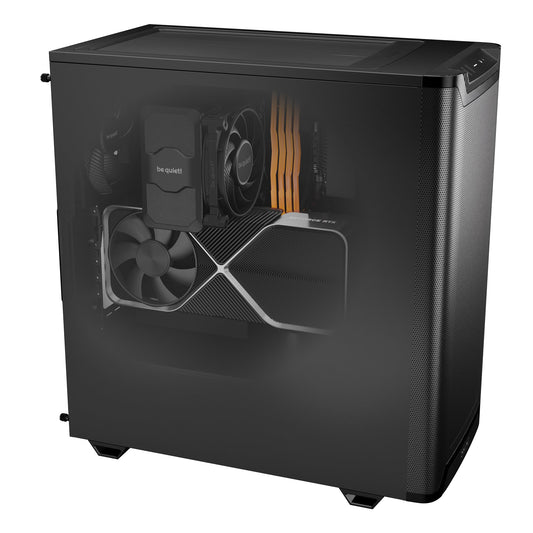
CoreAI 64 — RTX 5090 32 GB
32 GB VRAM · Ryzen 9 9950X3D · 64 GB DDR5
Restricted team server, models up to 70B.
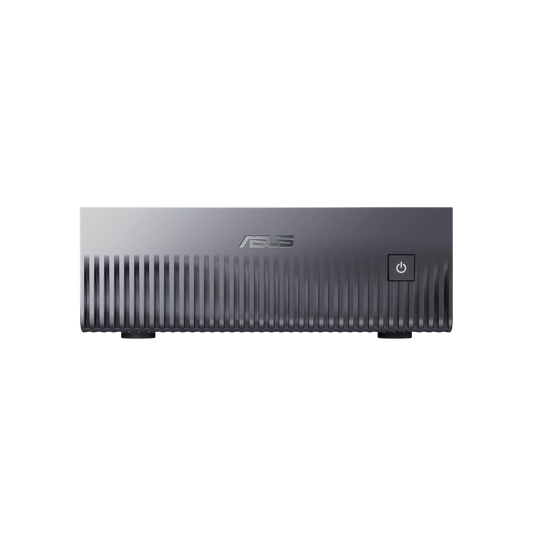
NVIDIA GB10 — ASUS Ascent GX10
128 GB unified memory · Grace Blackwell · DGX OS
Compact and silent server, ideal for shared offices.
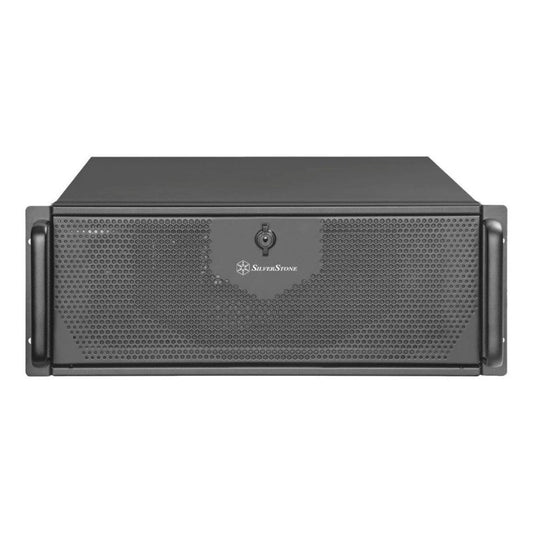
CoreAI Rack — 2 × RTX 5090 (64 GB)
64 GB VRAM · Ryzen 9 9950X3D · 128 GB DDR5 · 4U Rack
Higher throughput, more simultaneous requests.
Pro AI Ultra — Threadripper PRO
96 GB ECC VRAM · Threadripper PRO 7955WX · 128 GB ECC expandable
ECC reliability for continuous large-scale operation.
CoreAI 128 Rack — 2 × RTX 6000 Blackwell (192 GB ECC)
192 GB ECC VRAM · Ryzen 9 9950X3D · 128 GB DDR5 · 4U Rack
Top of the line: large models, 24/7 availability, several tens of workstations.
Frequently Asked Questions
How many users can a local AI server support?
This mainly depends on the VRAM and GPU memory bandwidth, not a software limit. Our configurations cover small teams of a few workstations to deployments of several tens of simultaneous users on rack and Threadripper configurations.
Does the server really replace a cloud subscription like ChatGPT or Copilot?
For writing, summarization, analysis, and code use cases, yes: current open models rival the best proprietary tools. A local server adds total confidentiality and eliminates recurring per-user costs. Some very specific integrations into a proprietary ecosystem may require a supplement, to be evaluated based on your tools.
Do I need an IT team to manage the server?
Not on a daily basis. Upon request, we deliver the pre-configured environment, with user accounts created. On-site installation is possible for initial network setup. Routine maintenance (updates, backups) remains comparable to that of a classic file server.
What happens if the headcount increases?
Machines are designed to evolve: adding RAM, storage, or even a second GPU on configurations that allow it. Planning for a margin from the outset avoids complete replacement when the team grows.
Does data really stay within the company?
Yes. The server operates on your local network or via VPN. No request, no document, no conversation is sent to a third-party service. This is the fundamental difference from a cloud subscription.
Can I add document RAG to the server?
Yes, as an option, just like on all our workstations. The server can index a document base common to the entire team, searchable by each user, with the same guarantees of confidentiality.