Local AI development and automation on GB10 and DGX Spark
The hardware is 20%.
What we build on top of it is 80%.
We don't just sell AI workstations. We develop the automations that make them useful.
A GB10 server sitting on a desk does nothing on its own. It becomes useful when you connect your documents, your processes, and your daily tools to it.
That is our second expertise: designing and developing these automations, entirely locally, on the machine we deliver to you.
The three levels of AI automation
Not all companies start at the same point. Here are the three levels we encounter most often, from the simplest to the most advanced.
Conversational Assistant
The starting point. A web interface accessible from any workstation, with your models installed and your documents indexed.
Your teams can ask questions, draft content, summarize, and query the document base. It is equivalent to a consumer tool, but hosted on-premises.
This level comes configured with the machine. It requires no specific development. It can be delivered on any of our AI workstations and servers, from the GB10 to rack servers.
Automated Workflows
Here, the AI stops waiting to be asked a question. It triggers automatically based on an event.
A document arrives, a form is filled, a timer goes off: a processing chain starts, calls the local model, produces a result, and distributes it where it needs to go.
We build these chains with n8n, an orchestrator we host on your machine. Everything remains local, including the data that moves between steps.
Custom Business Application
The most advanced level. When no off-the-shelf tool matches your process, we develop a dedicated application.
An interface adapted to your business, deterministic calculations where necessary, and calls to the local model only where it adds value. Everything is installed on your machine, with no external dependencies.
Development in Python, with the interface that suits your usage: desktop application, internal web interface, or integration into an existing tool.
The technical stack we install
Here are the layers we deploy on a GB10 or DGX Spark workstation, from the machine up to your daily usage.
Each layer is containerized with Docker. This allows updating one component without breaking the others, and reproducing the installation identically on a second machine.
Examples of what we build
Here are some types of projects, presented without identifying clients.
Automated Invoicing Chain
An order is validated on an online store. A webhook triggers document generation, formatting, and automatic email delivery to the client.
n8n, document generation service, mail server, all in Docker containers.
Business App with Transcription and Drafting
A professional records a session. The app transcribes the audio locally, inputs data into a structured form, calculates indicators via deterministic code, and then has the local model write the narrative parts. The final document is generated and ready for review.
Python, local Whisper, verifiable calculations, local language model, document generation.
Queryable Document Base
Hundreds of internal documents are segmented, vectorized, and indexed on the machine. Teams can query the entire database in natural language and receive answers with references to source documents.
Ingestion pipeline, vector database, local embedding model, chat interface.
Automated Monitoring and Follow-ups
A script checks an inbox, identifies folders with no response after a defined period, prepares follow-ups, and sends a summary notification to the team's internal messaging system.
Python, email access, scheduling, notification via Telegram or corporate messaging.
Why the GB10 is an ideal base
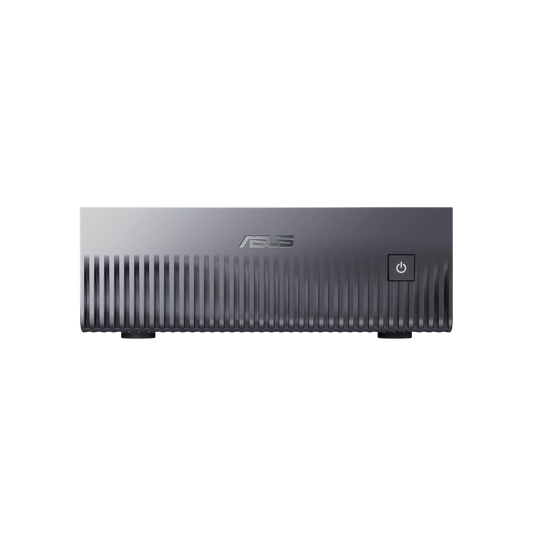
The NVIDIA GB10 platform, sold as the DGX Spark or ASUS Ascent GX10, has a decisive feature for these types of projects: 128 GB of unified memory.
In practical terms, this allows several components to run simultaneously that would otherwise compete for video memory on a standard graphics card: a large language model, an embedding model for document search, a transcription engine, and application containers.
Two other advantages matter for a machine running continuously: power consumption of approximately 240 W and a compact, silent form factor, allowing it to remain in an office rather than a technical room.

NVIDIA GB10 Mini AI Server
- Chip NVIDIA GB10 Grace Blackwell
- Memory 128 GB LPDDR5X unified
- Power 1 petaFLOP in FP4
- System DGX OS, ready-to-use Docker
- Consumption approximately 240 W
- Size 150 × 150 × 51 mm
How a project mission proceeds
- Initial exchange. We identify the process to automate, the volume involved, and privacy constraints. No obligation.
- Scoping and quote. We precisely describe what will be delivered, the necessary hardware base, and the cost. You approve before we start.
- Development. We build the solution and test it on a machine identical to yours.
- Installation. On-site or remote, according to your preference, with the entire environment preconfigured.
- Training. Hands-on training for those who will use the tool daily.
- Follow-up. Adjustments, adding documents to the index, updating models, and future evolutions.
Other machines adapted for these developments
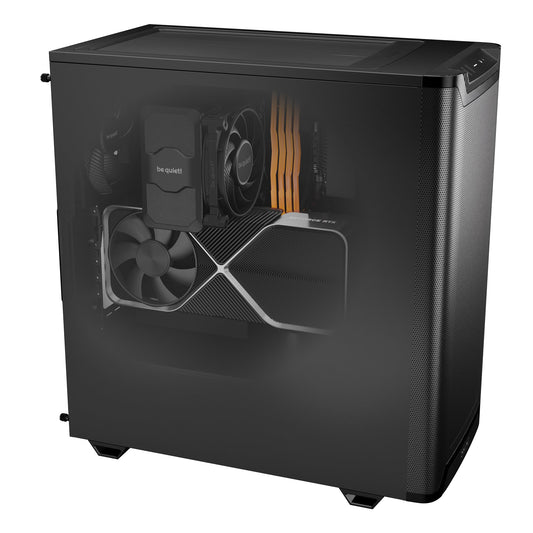
 CoreIA 32 — RTX 5070 Ti 16 GBSimple automations and moderate-sized document bases.
€2,862
CoreIA 64 — RTX 5090 32 GBHigh throughput for heavy processing and mass transcription.
€8,642
CoreIA 32 — RTX 5070 Ti 16 GBSimple automations and moderate-sized document bases.
€2,862
CoreIA 64 — RTX 5090 32 GBHigh throughput for heavy processing and mass transcription.
€8,642
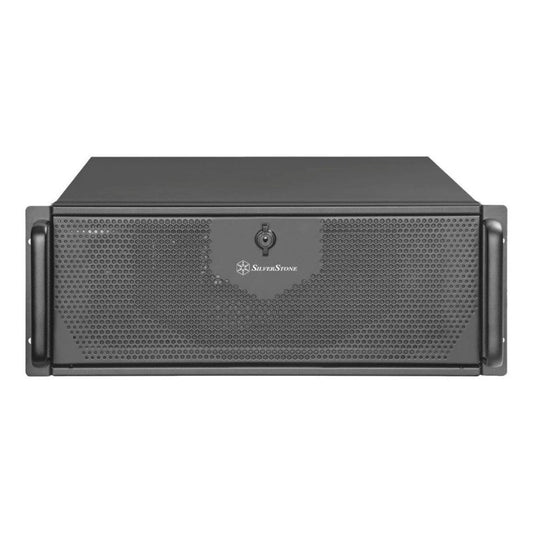
 CoreIA Rack — 2 × RTX 5090 (64 GB)Team-scale automations, parallel processing.
€17,887
CoreIA 128 Rack — 2 × RTX 6000 (192 GB ECC)Continuous production, many users, ECC reliability.
€42,452
CoreIA Rack — 2 × RTX 5090 (64 GB)Team-scale automations, parallel processing.
€17,887
CoreIA 128 Rack — 2 × RTX 6000 (192 GB ECC)Continuous production, many users, ECC reliability.
€42,452
To discuss an automation project, write to us at contact@radiancesystems.eu. We respond within 3 business hours, in French, English, or Dutch.
Frequently Asked Questions
What does Radiance Systems do beyond selling hardware?
We develop the automations that run on the machines: n8n workflows, custom Python applications, queryable document bases, and transcription and drafting chains. Everything runs locally, without transmitting data to an external service.
What are the GB10 and DGX Spark?
They are the same NVIDIA hardware platform, based on the GB10 Grace Blackwell chip, with 128 GB of unified memory. DGX Spark is the name of the NVIDIA reference design; ASUS Ascent GX10 is a specific implementation. This unified memory allows multiple AI components to run simultaneously on a single compact machine.
Why use n8n rather than an online automation service?
Because n8n can be hosted on your own machine. Online automation services route your data through their servers. With n8n installed locally, documents, messages, and results remain within your infrastructure.
Can local AI be connected to our existing tools?
Yes, in most cases. Messaging, file storage, online stores, internal tools with an API: these are the typical connection points for a workflow. We check feasibility during the scoping phase.
How much does custom development cost?
It depends entirely on the scope. A simple automation represents a few days of work; a complete business application requires more. We provide a precise quote after the scoping exchange, before any commitment on your part.
Do I have to buy the machine from you to benefit from development?
It is not mandatory, but it is easier. When we provide the machine, we master the entire environment and can test the solution on an identical configuration before delivery. However, we do study requests involving existing infrastructure.
What happens if our needs evolve?
The solutions are designed to evolve. Adding documents to the index, modifying a step in a workflow, or replacing a model with a newer version is part of the follow-up we offer.
The examples presented describe types of projects and are intentionally anonymized. The scope, duration, and cost of a project depend on your processes and constraints; they are defined during scoping and formalized in a quote before any work begins.