Which PC for SenseNova-Loop-9B? Our test on RTX 5060 Ti vs. Gemma 4 12B
Updated: November 19, 2026
Which PC for SenseNova-Loop-9B?
We tested it on an RTX 5060 Ti 16 Go, compared against Gemma 4 12B.
SenseNova-Loop-9B runs smoothly on our smallest AI PC: it requires less than 6 GB of GPU memory in 4-bit mode. However, in real-world tasks, it is three times slower than Gemma 4 12B on the same card and less reliable. All figures from this test were recorded on our machine on November 19, 2026.
SenseTime released SenseNova-Loop-9B on Hugging Face on November 17, 2026. This 9-billion parameter model claims to perform at the level of much larger models. On paper, it is the ideal candidate for a mainstream graphics card like the RTX 5060 Ti 16 Go. We installed it, measured its performance, and compared it to Gemma 4 12B, the model we use daily on the same card.
Test Machine
| Graphics card | NVIDIA GeForce RTX 5060 Ti 16 Go |
| SenseNova-Loop-9B | Official 4-bit file (Q4_K_M, 5.8 GB), SenseTime llama.cpp, running on Ubuntu via Windows (WSL) |
| Gemma 4 12B | 4-bit (Q4_K_M) in Ollama, on Windows |
| Common Settings | 8,192 token context, reasoning disabled, single request at a time |
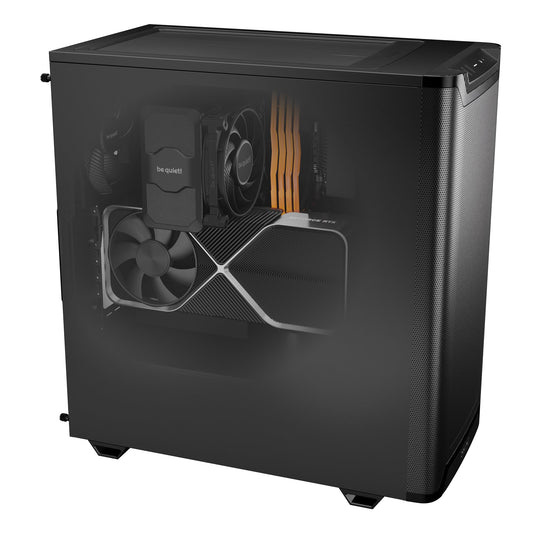
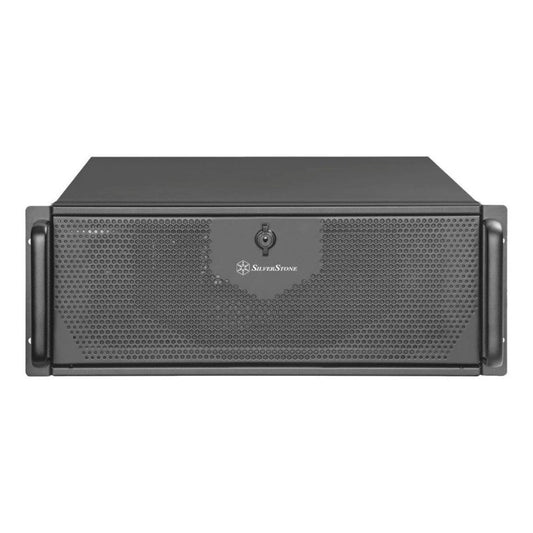
This is the card for our CoreIA RTX 5060 Ti, our smallest AI PC.
A model that passes through the same layers twice
SenseNova-Loop-9B has 32 layers, but 24 of them are executed twice for every token using the same weights. SenseTime refers to this as "the equivalent of 14.6 billion parameters" during calculation. However, memory usage only depends on the 9.4 billion parameters actually stored.
The trade-off: low memory requirements, but high computational demand. In llama.cpp, a single generated token triggers approximately 52,700 operations on the card. This is where speed comes into play. Three out of four layers use linear attention: the context cache is tiny, which is a significant quality of the model.
Measured speed
| Measurement on RTX 5060 Ti 16 GB | SenseNova-Loop-9B | Gemma 4 12B |
|---|---|---|
| Generation | 16 tokens/s | 48 tokens/s |
| Reading a 6,500 token prompt | 450 to 500 tokens/s | 2,080 tokens/s |
| First word, short question | 2.4 to 3 s | 0.15 s |
| First word, 6,500 token prompt | 15 s | 3.3 s |
| 420 token response for this large prompt | 44 s | 10 s |
| Card memory, 8,192 token context | 5.9 GB | 8.5 GB |
Radiance Systems measurements from November 19, 2026, using the same prompts for both models, with reasoning disabled. These are our measurements on a specific machine and software version: different configurations may yield different results.
To rule out a WSL effect, we also measured Gemma 4 12B using the exact same llama.cpp within the same WSL: 39 tokens/s in generation, compared to 13.5 for SenseNova (llama-bench test). Gemma performs almost as fast there as it does under Windows with Ollama. The slowness is therefore clearly due to SenseNova's loop architecture.
Quality on our real-world tasks
Published scores do not tell the whole story. We tested both models on the tasks our local AI performs every day, using the exact same code:
An assistant with tools
67 real-world questions: calendars, emails, figures, tasks, quotes, and multi-turn exchanges. An automated check verifies that the correct tool is called, that the action is actually performed, and that nothing is hallucinated.
Emails
Summary in two or three lines, suggested response, response drafted according to instructions.
Translations
Quote lines and web page blocks, from French to English, German, and Dutch.
For emails and translations, each pair of responses was blind-tested and scored from 1 to 5 by a separate AI reviewer. The responses were randomly assigned labels A and B, so the reviewer did not know which model produced which response.
| Task | SenseNova-Loop-9B | Gemma 4 12B |
|---|---|---|
| Tool-enabled assistant (automated check) | 52 out of 67 | 67 out of 67 |
| Median time for an assistant response | 14.5 s | 2.9 s |
| Full benchmark of the assistant | 33 min | 4 min 20 |
| Draft an email (summary and suggested response) | 28 to 61 s | 6 to 15 s |
| Translate 9 sets of quote lines into three languages | 11 min | 3 min 30 |
| Translate 9 web page blocks | 6 min 30 | 1 min 50 |
| Emails, average score (15 tasks) | 3.3 out of 5 | 3.8 out of 5 |
| Translation of quote lines (9 tasks) | 2.4 out of 5 | 3.7 out of 5 |
| Web page translation (9 tasks) | 2.7 out of 5 | 4.1 out of 5 |
| Blind wins | 6 | 22 (5 ties) |
And with reasoning enabled?
SenseTime compares its model to much larger models, and these scores are measured by allowing the model to "think" before responding. We therefore repeated the same tasks with reasoning enabled for both models: an additional 6,000 tokens for reasoning and a 16,384 token context. Reasoning is never included in the scored response, and the blind rating was re-evaluated by a new reviewer.
| Before, then with reflection | SenseNova-Loop-9B | Gemma 4 12B |
|---|---|---|
| Emails, average grade (15 tasks) | 3.3 then 3.4 | 3.8 then 4.1 |
| Median time for an email | 37 s then 84 s | 9 s then 97 s |
| Quote lines (9 lots) | 8 batches submitted, average score 2.3 | Only 5 batches were submitted, all of which received a score of 4 |
| Web page blocks | 7 out of 9 accepted, including one after 18 minutes | No results for the 8 measured |
Reflection does not bridge the gap
SenseNova shows limited progress on emails, while Gemma shows more significant progress. In German and Dutch, SenseNova continues to invent words.
Gemma 4 12B spends forever thinking about translations
It consumes the entire reasoning budget, exceeding 30,000 characters for a single block, and fails to provide any translation. The result remains the same even with the temperature recommended by Google (1.0). To get a translation, you must disable its reasoning step.
Reasoning is time-consuming
Processing an email jumps from a few seconds to over a minute and a half. On a simple question, SenseNova spends less time reasoning than Gemma (683 tokens versus 2,460), yet it is three times slower: 49 seconds compared to 54.
Why does a model marketed at the level of a 27-billion-parameter model perform poorly here? Our hypotheses, which remain unverified:
Loops add computation, not knowledge
Passing through the same layers twice helps with reasoning, but the vocabulary and language capabilities remain those of a 9-billion-parameter model.
Published benchmarks do not reflect our tasks
Benchmarks focus primarily on coding, agents, and data analysis in English or Chinese. This is far from content creation in French, German, and Dutch.
Our benchmark was optimized for Gemma
This gives Gemma a slight advantage. SenseNova may also lose a few points due to 4-bit compression and the very recent version of llama.cpp from SenseTime.
What SenseTime's scores indicate
SenseTime does not compare its model to Gemma 4 12B or Qwen3.5 9B. Instead, it compares it to Qwen3.8-27B, which is three times larger, across seven selected tests, primarily in English: it performed equally or better in four, and slightly lower in three. Our test, conducted in French and on our own specific tasks, provides a much less flattering picture.
| Test (scores published by SenseTime) | SenseNova-Loop-9B | Qwen3.8-27B |
|---|---|---|
| GAIA (tool-use assistant) | 69.9 | 67.0 |
| BIRD (SQL queries) | 72.3 | 69.8 |
| AIDABench (data analysis) | 65.3 | 65.0 |
| AutomationBench (automation) | 36.7 | 36.7 |
| Terminal-Bench 2.1 (command-line work) | 59.6 | 63.4 |
| NL2Repo (writing a code project) | 41.4 | 44.6 |
| τ³-Banking (customer service agent) | 30.9 | 36.1 |
Scores provided by SenseTime in a chart on the model's spec sheet, measured using their own settings: these are for general reference, not an independent ranking.
Memory and Hardware
| Weight Precision | GPU Memory | Machine |
|---|---|---|
| Q4 (4 bits), 8,192 token context | 5.9 GB measured | CoreIA RTX 5060 Ti |
| Q4 (4 bits), 32,768 token context | 8.6 GB estimated | CoreIA RTX 5060 Ti |
| Q8 (8 bits), 32,768 token context | 12.6 GB estimated | CoreIA RTX 5060 Ti |
| FP16 (16 bits), 32,768 token context | 20.8 GB estimated | CoreIA RTX 5090 |
Radiance Systems' estimates are conservative: they account for a separate cache for every pass through repeated layers, plus a safety margin. Our 4-bit measurement is significantly lower.
| Machine | GPU Memory | Price excl. VAT | SenseNova-Loop-9B |
|---|---|---|---|
| CoreIA RTX 5060 Ti | 16 GB | €1,735 | Yes, in 4 or 8 bits. This is the card used in our test. |
| CoreIA RTX 5090 | 32 GB | €9,403 | Yes, even in 16 bits. Not tested on this card. |

View the CoreIA RTX 5060 Ti
Installation status to date
As of November 19, 2026, neither Ollama nor LM Studio support this model. You must compile the llama.cpp version released by SenseTime, but no pre-built version exists for Windows. We compiled it under Ubuntu within Windows (WSL). Watch out for these three pitfalls:
The correct commit
The version specified in the model's documentation is not on the main branch; you must retrieve it separately.
The web interface
The web interface download fails during compilation. You should disable it: the server runs perfectly without it.
RTX 50
You need CUDA 12.8 or newer and must compile for the RTX 50 architecture.
If you purchase a machine from us, we will handle the installation for you.
The license
The license is Apache 2.0: commercial use is permitted with no turnover threshold, provided you retain the original license and notices. The original weights are available after requesting access on Hugging Face, which is granted automatically; the GGUF version is freely accessible.
Summary of the license stated on the model's page. This is not legal advice.
Our verdict
While SenseNova-Loop-9B runs smoothly on an RTX 5060 Ti 16 Go, it fails to live up to its promises when compared to Gemma 4 12B. It is three times slower at generation, four times slower when processing long texts, and less reliable for real-world tasks in French, German, and Dutch.
Its architecture trades memory for computing power. However, on a 16 Go card, memory is not the bottleneck for a model of this size, meaning this trade-off works against it. It might become an interesting option once llama.cpp and Ollama have optimized its operations. For now, on this specific card, Gemma 4 12B remains our top choice.
If you are looking for something even smaller for simple agents, see our article on LFM3.
Which model is right for your needs?
Tell us what you want to automate. We will advise you on the best model and the appropriate machine. Free, no-obligation quote.
Frequently Asked Questions
Can SenseNova-Loop-9B run on an RTX 5060 Ti 16 Go?
Yes. We measured approximately 5.9 GB of GPU memory in 4-bit with a context of 8,192 tokens. There is still plenty of space left on the graphics card.
What is the speed on an RTX 5060 Ti 16 Go?
We measured 16 tokens per second during generation, compared to 48 for Gemma 4 12B on the same card. These are our measurements from November 19, 2026, using a very recent software version.
Is it better than Gemma 4 12B?
Not on our tasks. It successfully completed 52 out of 67 assistant tasks, compared to 67 out of 67 for Gemma 4 12B. Additionally, Gemma won 22 out of 33 blind tests, while SenseNova won 6 and there were 5 ties.
Does enabled reasoning change the result?
No. With the reasoning feature enabled, SenseNova scores increase from 3.3 to 3.4 out of 5 on our emails, while Gemma 4 12B improves from 3.8 to 4.1. However, Gemma no longer provides translations when reasoning is active; you must disable the reasoning mode for it to translate.
Why is it mentioned as having 14.6 billion parameters?
The model executes a portion of its layers twice: it performs calculations as if it were a model with approximately 14.6 billion parameters, but only stores 9.4 billion. The latter figure determines the memory requirements, while the former explains its slower processing speed.
Does it work with Ollama?
Not as of November 19, 2026. You must compile the llama.cpp version released by SenseTime.
Can it be used in a corporate environment?
Yes. It is under the Apache 2.0 license: commercial use is permitted, provided you retain the original license and notices.
Sources: Radiance Systems test from November 19, 2026, on RTX 5060 Ti 16 GB; SenseTime, SenseNova-Loop-9B datasheet ; official GGUF files ; SenseTime llama.cpp ; Apache 2.0 license.
Let’s talk about your local AI project
By phone or video call, we look at what you need together. You leave with a clear recommendation, with no commitment.
- The AI computer or server that fits your use and your team
- What we should develop for you, if needed: automations, applications, search in your documents
- Budget and lead times, with a quote within 24 hours
Calls in English, French or Dutch.
You are booked!