Local AI for notaries: deeds and due diligence with complete confidentiality

A notary is a public officer. This changes everything. Where a consultant can discuss the fate of their data with their client, a notary handles original documents, authentic deeds, and patrimonial data for which confidentiality is a founding principle, not a contractual option. Any AI that processes this data must comply with this framework—and not the other way around.
Local AI naturally fits this requirement: processing occurs entirely on a machine within the firm, without any byte leaving for a third-party server. This guide explains what local AI concretely changes for a notary, with technical workflows for three use cases—due diligence, current acts, and interrogation of original records—and presents the services Radiance Systems offers beyond hardware: custom development, optimization, and document indexing.
An acts/tasks matrix where local AI saves time
Here's what a well-configured local AI saves, task by task. The table is indicative—each firm adjusts according to its specialties.
| Type of act or task | Contribution of local AI | Estimated gain |
|---|---|---|
| Real estate sale — VEFA, existing properties | Extraction of easements, reading of diagnostics, consistency between documents | 1 to 2 hours per file |
| Succession | Family chronology, inventory, synthesis of previous liberalities | 2 to 3 hours per file |
| Donation-sharing | Comparison of lots, civil and fiscal projections, editorial consistency | 1 to 2 hours |
| Marriage contract, PACS | Generation of options by regime, analysis of pre-existing patrimony | 30 min to 1 hour |
| Corporate acts — articles of association, transfers | Synthesis of existing articles, projection of clauses, consistency checks | 1 to 2 hours |
| Patrimonial due diligence | Consolidation, alerts, audit preparation | Up to a full day |
| Search in original records | Natural language query of acts received by the firm | Variable, but often decisive |
Three concrete technical workflows

A succession or patrimonial audit file sometimes represents several hundred pieces. Local AI structures, humans decide.
Patrimonial due diligence for a complex file
- Batch deposit of documents (bank statements, previous acts, life insurance contracts, titles, leases) into a local folder.
- Local indexing by the RAG in minutes.
- Structured extraction: item by item, amounts, subscription dates, beneficiaries, tax regimes.
- Cross-alerts: inconsistencies between documents, duplicates, missing documents automatically flagged.
- Summary note ready for client meeting, several structured pages in reduced time.
- Validation by the notary with review of source references — each assertion refers to the original document.
Assisted drafting of a common act
- Selection of act type (donation, sale, articles of association) in the local interface.
- Loading of variable elements: identities, assets, values, regimes.
- Generation of draft from your own indexed templates, in the firm's editorial style.
- Automatic checks: identity consistency, completeness of mandatory mentions, simple calculations.
- Adjustments dictated by the notary, AI reformulates and integrates.
- Final version to be checked and signed — AI does not authenticate, it prepares.
Interrogation of the firm's original records
- Initial indexing of original records — the operation is done once, internally, without transmission.
- Natural language query from any workstation in the firm.
- Contextual extraction: relevant passages from concerned acts are found and quoted.
- Possible comparative synthesis: compare several similar acts received by the firm.
- Traceability: each response refers to the original minute number and date.
The framework: why local is consistent with the function
Confidentiality is non-negotiable
The notary is bound by professional secrecy for everything entrusted to them in the exercise of their function. Article 3-1 of the ordinance of November 2, 1945 and the national notary regulations govern this obligation, which applies as much to the preservation of original records as to the daily handling of data.
Transmitting an act to an online AI service is by nature a communication to a third party. Regardless of what this third party promises in its general terms and conditions: the nature of the act remains the same. Local AI eliminates this issue at the root: data never leaves the firm. This is the only truly compatible mode of generative AI operation, without complex contractual arrangements, for notarial practice.
In addition, it complies with GDPR: fewer subcontractors, fewer transfers, fewer risks. The process must, of course, be documented in the firm's register, but local AI offers the most solid starting point.
Recommended hardware configuration
A notary's office has needs that are threefold: power for processing large files, video memory for indexing voluminous original records, and multi-user capability to serve the entire team from a single server. The configurations below cover these cases.
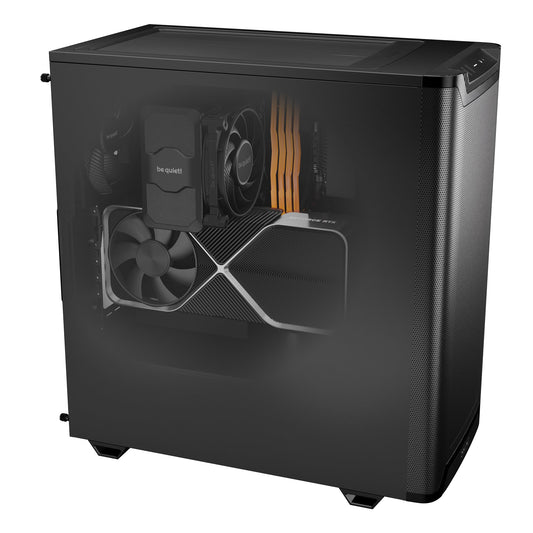
 CoreAI 32 — RTX 5070 Ti 16 GBWorkstation for a notary or collaborator, with document RAG.
€2,442
CoreAI 32 — RTX 5070 Ti 16 GBWorkstation for a notary or collaborator, with document RAG.
€2,442
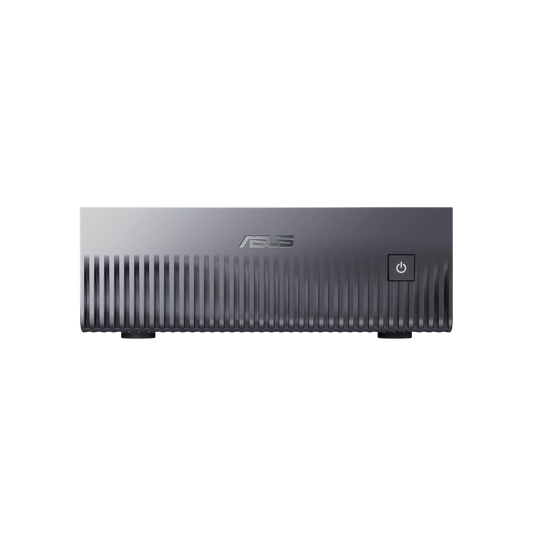
 NVIDIA GB10 Mini AI Server128 GB unified: indexed original records, entire firm connected via network.
€3,999
CoreAI 64 — RTX 5090 32 GBDemanding firms: 70B models, heavy due diligence, large files.
€6,042
NVIDIA GB10 Mini AI Server128 GB unified: indexed original records, entire firm connected via network.
€3,999
CoreAI 64 — RTX 5090 32 GBDemanding firms: 70B models, heavy due diligence, large files.
€6,042
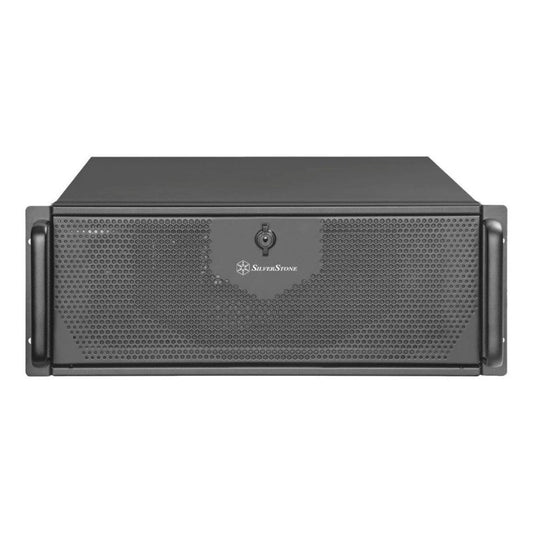
 Pro AI Ultra — Threadripper PRO96 GB VRAM ECC: large firms, very voluminous original records, maximum reliability.
€20,213
Pro AI Ultra — Threadripper PRO96 GB VRAM ECC: large firms, very voluminous original records, maximum reliability.
€20,213
All these machines are hand-assembled in Auriol (13390) and fully configurable—via the online configurator or by quote at contact@radiancesystems.eu—with the AI environment pre-installed upon request. On-site installation is possible throughout France and Europe, with staff training.
Beyond hardware: our development and optimization services
Support beyond the machine
Hardware is only half the battle. For local AI to be truly useful in a notary's office, models need to be adapted, the indexing of original records structured, and often small custom tools developed around the existing workflow. Radiance Systems supports firms through all these steps.
For a project, a specific need, or just an exploratory discussion: contact@radiancesystems.eu. We provide a custom quote adapted to the size of your firm and your priorities.
Getting started: some practical advice
Transitioning to local AI doesn't have to be a major undertaking. Starting small and gradually expanding is the best approach for a notary's office.
Three principles to keep in mind throughout the process.
A narrow initial scope is better than an ambitious, poorly defined project. A well-controlled use—for example, synthesizing previous donations in successions—brings more value than a poorly executed complete overhaul.
Human validation remains the absolute rule. No act can be signed without review by the notary. AI proposes, structures, prepares—authentication remains that of the public officer.
The firm's editorial consistency must be preserved. A well-configured model, fed by your own templates, drafts in the firm's style, without ever being shared externally.
Frequently Asked Questions
Is local AI compatible with the notary's professional secrecy?
Yes, by design. Processing occurs entirely on a machine installed in the firm, without any document being transmitted to a third party. This is the structural difference from an online AI service, where each request is communicated to an external provider.
Can the entire original records be queried?
Yes, provided the acts are indexed upstream. This is an internal operation, done once, which makes the original records searchable in natural language from any workstation in the firm. Radiance Systems offers this service as part of its support services.
What level of customization is possible?
Beyond hardware, Radiance offers development and optimization services to adapt AI to your standard acts, your editorial style, and your automations. Configurations and services are entirely by quote, depending on the size of your firm and your needs.
Which machine to start with?
For an individual notary or a team of two collaborators, the CoreAI 32 (starting from €2,442) is a good entry point. For an entire firm that wishes to index its original records and share AI, the GB10 mini-server (starting from €3,999) or the CoreAI 64 are better sized. We guide you according to your exact volume and uses.
Are installation and training included?
Upon request, yes. We offer on-site installation, configuration of the AI environment, initial indexing of your documents, and hands-on training for the entire team. All within the framework of a clear quote.
As with any processing of personal data, it is recommended to document your approach in the firm's register. Local AI simplifies GDPR compliance by eliminating subcontractors and transfers, without exempting from standard documentation obligations.