Local AI for bailiffs: reports and deeds without the cloud

You observe in the field.
You draft in the evening.
Local AI does not go on-site. It handles everything that comes after.
How much time can an office really save? Adjust the numbers below to your activity.
Calculate your profitability
The only argument that truly matters is time. Adjust the values below to your office's reality to estimate what a local AI station can save you, and how quickly it would pay for itself.
Your current situation
Your estimated savings
This estimate is based on the assumptions you enter and on time savings applied only to drafting and formatting work. It does not constitute a commitment to results: actual gains depend on your processes, the type of acts handled, and the time it takes to adopt the tool. On-site observation time, travel, and legal work are not included in this calculation.
The real question remains: is this compatible with your status as a public officer? The profession's objections are legitimate. Here are the five main ones, addressed head-on.
Five objections, five answers
Exactly. And that's the line never to cross.
But between observing and drafting the statement, there is formatting work that is not part of the observation.
You dictate on-site. Back at the office, the local transcription converts your dictation into text and structures it according to your template. You review, correct, sign.
What you sign remains entirely what you observed.
That is precisely the purpose of local.
An online service transmits your data to a third party, often outside Europe. For a ministerial officer bound by secrecy, this transmission is inherently the problem.
Local AI runs entirely on a machine in your office. No outbound connection is necessary. Seizure situations, debtor contact details, sensitive statements: nothing leaves.
Valid objection. Setting up the technical chain yourself is real work, and that's where most projects stop.
Hence our machines delivered ready to use: environment installed, model downloaded, interface in the browser. You open a page, you write.
On-site installation and team training available.
Caution is justified. A model queried without context can confidently assert false things. This is a real flaw, not a myth.
Two safeguards change everything:
Usage. The model is not asked to know, but to rephrase what is given to it: your dictation, your template, your documents.
Indexing. Responses are based on your own documents, with references to the source.
And proofreading before signing remains the absolute rule.
The calculation is based on drafting time — use the simulator at the top of the page with your own figures.
A single machine, shared by the entire firm, replaces subscriptions billed per user per month. Entry point under €2,000, with no recurring cost.
The real benefit is elsewhere: time returned to the field and to advice.
The line never to cross
AI drafts, it does not observe
A statement is authentic because a sworn officer has observed the facts in person, at a given time and place.
AI does not go on-site. It sees nothing, measures nothing, hears nothing.
It must never complete a statement by deduction, fill in a blank in a dictation, or "improve" a description beyond what was observed.
Its role is limited to formatting your observations and what surrounds the act. What you sign must be what you have seen.
Concrete uses, act by act

The volume of writing in a firm is considerable, and largely mechanical. This is the domain of local AI.
- Statements Transcription of on-site dictation, then structuring according to your template. You dictate as you observe, the office receives a drafted and organized draft. Ideal for long statements: inventories, construction defects, postings, nuisances.
- Notifications Generation of draft acts from your validated templates, with verification of completeness of mentions and consistency of identities and addresses.
- Debt Collection Drafting personalized reminder letters, summarizing a case's history, preparing payment schedules and progress reports for the creditor.
- Inventories Formatting a dictated inventory, classification by category, verification of consistency of mentions and recorded values.
- Correspondence Responses to recurring requests from creditors, debtors, lawyers, and colleagues, in the tone and formality of the firm.
- Research Natural language querying of your past files and acts: finding a comparable procedure, a clause, a precedent handled by the firm, without digging through the directory tree.
- Voluminous documents Summarizing long documents transmitted by a client or opponent: contracts, expert reports, voluminous exchanges, with extraction of key points.
The hardware: our full range
An office has moderate computing needs, but real needs for transcription and document volume. The choice mainly depends on the number of connected collaborators and the size of the archives to be indexed.
Individual workstations and small firms
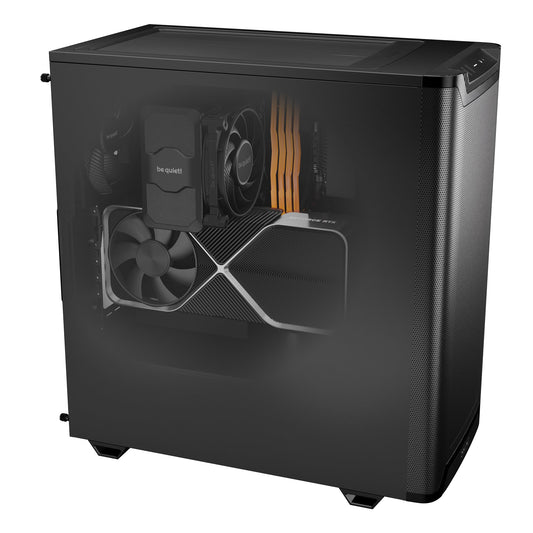
 CoreAI 16 — RTX 5060 Ti 16 GBIndividual workstation: dictation transcription, drafting, correspondence.
€1,703
CoreAI 32 — RTX 5070 Ti 16 GBHigh-volume firm: indexing past files and acts.
€2,442
CoreAI 64 — RTX 5090 32 GBMaximum drafting quality, mass transcription, voluminous documents.
€6,042
CoreAI 16 — RTX 5060 Ti 16 GBIndividual workstation: dictation transcription, drafting, correspondence.
€1,703
CoreAI 32 — RTX 5070 Ti 16 GBHigh-volume firm: indexing past files and acts.
€2,442
CoreAI 64 — RTX 5090 32 GBMaximum drafting quality, mass transcription, voluminous documents.
€6,042
Office-shared server
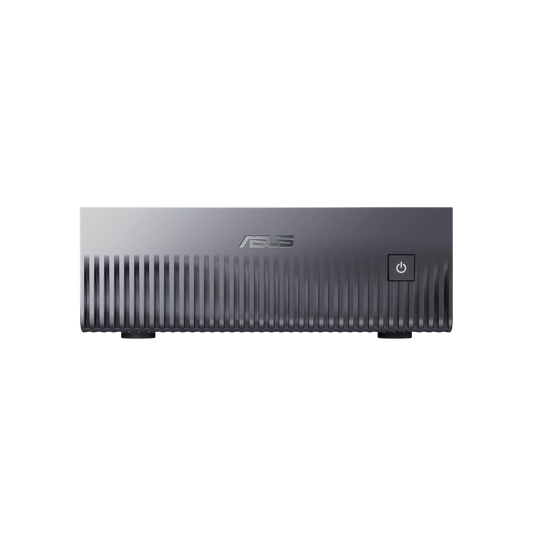
 NVIDIA GB10 Mini AI Server128 GB unified: connected clerks and collaborators, indexed common database.
€3,999
NVIDIA GB10 Mini AI Server128 GB unified: connected clerks and collaborators, indexed common database.
€3,999
Large firms and groups
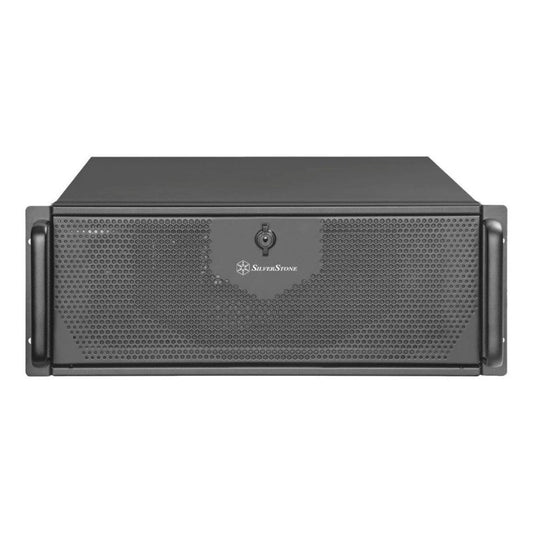
 CoreAI Rack — 2 × RTX 5090 (64 GB)4U Rack: multiple connected sites, parallel transcription and indexing.
€11,221
Pro AI Ultra — Threadripper PRO96 GB ECC VRAM: very large archives, continuous operation.
€20,213
CoreAI 128 Rack — 2 × RTX 6000 (192 GB ECC)Groups: dozens of simultaneous users, 24/7 availability.
€27,980
CoreAI Rack — 2 × RTX 5090 (64 GB)4U Rack: multiple connected sites, parallel transcription and indexing.
€11,221
Pro AI Ultra — Threadripper PRO96 GB ECC VRAM: very large archives, continuous operation.
€20,213
CoreAI 128 Rack — 2 × RTX 6000 (192 GB ECC)Groups: dozens of simultaneous users, 24/7 availability.
€27,980
All these machines are hand-assembled in Auriol (13390), fully configurable via the online configurator or upon request at contact@radiancesystems.eu, and delivered with the AI environment pre-installed: language model, local transcription, browser-accessible interface, and optional document indexing.
A gradual implementation
1. Dictation transcription. The most immediate gain, without changing your processes. One machine, one recorder, and the evenings of typing disappear.
2. Structuring according to your templates. Give the model a few validated sample statements: it adopts your formalism instead of inventing one.
3. Archiving and indexing. The longest task, but the one that changes everything: the firm's memory becomes queryable in a single sentence.
This article provides general guidelines and does not constitute legal or ethical advice. The judicial officer remains solely responsible for the content of the acts he or she draws up and signs, as well as for compliance with professional obligations. As with all personal data processing, it is recommended to document your approach in the firm's register. Radiance Systems provides the equipment and technical support.