Local AI for HR firm: CVs, interviews, and personal data GDPR compliant

A CV contains a name, an address, work history, sometimes a photo and a date of birth. This is personal data in the fullest sense of the term, entrusted by someone hoping for a job who has no way of knowing where it actually ends up.
Recruitment is also one of the few areas where European law specifically governs the use of artificial intelligence. In other words: this is not a sector where one can improvise.
To understand how local AI truly changes the game, the simplest approach is to follow a CV from start to finish. Step by step, here’s what it offers — and the pitfall to avoid each time.
The Journey of a CV, Step by Step
Application Receipt
The CV arrives by email or via a form. This is when it becomes data that you process, along with the associated obligations: informing the candidate, defined purpose, and announced retention period.
The pitfall: the habit of forwarding a CV to an online tool to "see what it says." This simple act transmits personal data to a third party, often outside Europe. With local AI, the CV remains within the firm.
Review and Synthesis
This is where local AI saves the most time. It extracts career paths, standardizes disparate formats, summarizes technical skills, and calculates experience durations. Twenty unreadable CVs become twenty comparable profiles in minutes.
The pitfall: crossing the line between summarizing and scoring. Requesting a summary is useful; requesting a compatibility score that will determine the candidate's fate is an entirely different matter, legally risky and technically biased.
Interview Preparation
Based on the job description and career path, AI suggests relevant questions about the actual required skills. The consultant chooses, discards, and supplements. The result: better prepared interviews, more equitable among candidates because they are better structured.
The pitfall: letting AI generate questions from personal elements of the CV — apparent age, family situation, name origin. Frame the request around skills and the position, never the individual.
The Interview and its Report
With the candidate's explicit consent, the interview can be transcribed locally and then summarized. The consultant listens instead of taking notes, and the report is ready in minutes. The candidate's voice — a potential biometric data point — never leaves the machine.
The pitfall: automatic analysis of emotions, tone, or "personality" from video or voice. These techniques rely on contested scientific bases and are particularly regulated in a professional context.
The Decision
AI can structure the factual elements collected, prepare a comparative summary for the client, and help draft an argued recommendation. These are formatting tasks, not arbitration.
The pitfall: the only really serious one. A refusal decision based exclusively on automated processing is regulated by the GDPR, and the risk of reproducing historical biases is real. The decision must be human, justified, and you must be able to demonstrate it.
Archiving — and Purging
An unsuccessful CV is subject to a limited retention period. This is the step everyone forgets, and it becomes more delicate when documents have been indexed in an AI tool.
The pitfall: thinking that purging the folder is enough. If the CV has been indexed in a document database, it must also be removed from the index. Plan for periodic purging from the outset — it's much simpler to automate initially than to correct later.
Three Costly Mistakes

The most frequent failings don't stem from malicious intent, but from thoughtless habits.
1. Believing that going local solves everything
This is the most common mistake, and it deserves to be stated clearly: moving from the cloud to local AI eliminates the problem of data transfer. It does not eliminate fundamental rules. A local AI that automatically sorts applications, or deduces a candidate's age, would remain equally problematic.
What to remember: local protects confidentiality, your configuration protects fairness. Both are necessary.
2. Recording an interview without explicit consent
Automatic transcription is one of the most appreciated uses in HR firms. But a recording made without prior and clearly formulated consent poses an immediate problem — even if everything remains local and no one else has access to it.
What to remember: ask for consent at the beginning of the interview, explain the purpose and retention period, and accept a refusal without consequence for the candidate.
3. Indexing everything, for convenience
Since the tool accepts PDFs, the temptation is to dump all files into it: photos, identity documents, personal correspondence, informal notes. This violates the principle of minimization and unnecessarily increases the risk of bias.
What to remember: index only what is relevant to the position. Many firms even anonymize CVs before processing — removing name, photo, address, and date of birth — which mechanically reduces bias while retaining essential information.
The Rule of Three H's
If you were to take away only one thing from this article, this would be it. Three simple words to frame any use of AI in a recruitment process.
Three conditions to always respect
The three go hand in hand. Local AI without human supervision remains risky; impeccable supervision on a cloud tool leaves the transfer question unanswered; and both together do not exempt you from informing candidates.
Concretely, what changes in the firm?
Before, a consultant would spend a significant part of their week reading diverse CVs, reformatting information, drafting interview reports in the evening, and sending impersonal rejection letters due to lack of time.
With well-configured local AI, these tasks are condensed. CVs arrive synthesized in a uniform format. Reports are drafted while the next interview begins. Candidate feedback becomes personalized, because it no longer takes twenty minutes each. The consultant regains time for what makes the profession valuable: meeting, understanding, advising.
And throughout this time, no CV has left the firm's premises.
The Hardware: Our Full Range
The needs of an HR firm are moderate in computation but significant in document volume: many CVs, reports, reference materials to index, and often several consultants to serve. Here is our full range of machines, from individual workstations to enterprise servers.
Individual Workstations and Small Firms
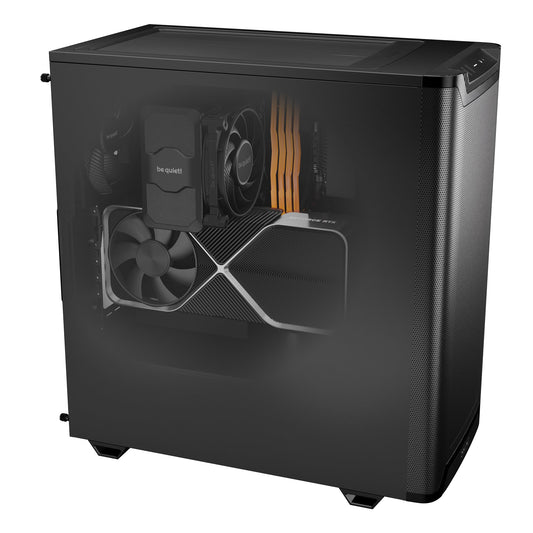
 CoreAI 16 — RTX 5060 Ti 16 GBIndependent consultant: CV synthesis, transcription, writing.
€1,703
CoreAI 32 — RTX 5070 Ti 16 GBHigh-volume firm: indexing a large document pool.
€2,442
CoreAI 64 — RTX 5090 32 GBDemanding firms: 70B models, bulk transcription, maximum quality.
€6,042
CoreAI 16 — RTX 5060 Ti 16 GBIndependent consultant: CV synthesis, transcription, writing.
€1,703
CoreAI 32 — RTX 5070 Ti 16 GBHigh-volume firm: indexing a large document pool.
€2,442
CoreAI 64 — RTX 5090 32 GBDemanding firms: 70B models, bulk transcription, maximum quality.
€6,042
Shared Server for the Firm
 Mini NVIDIA GB10 AI Server128 GB unified: multiple connected consultants, common database, silent.
€3,999
Mini NVIDIA GB10 AI Server128 GB unified: multiple connected consultants, common database, silent.
€3,999
Rack and Multi-GPU for Large Firms and Groups
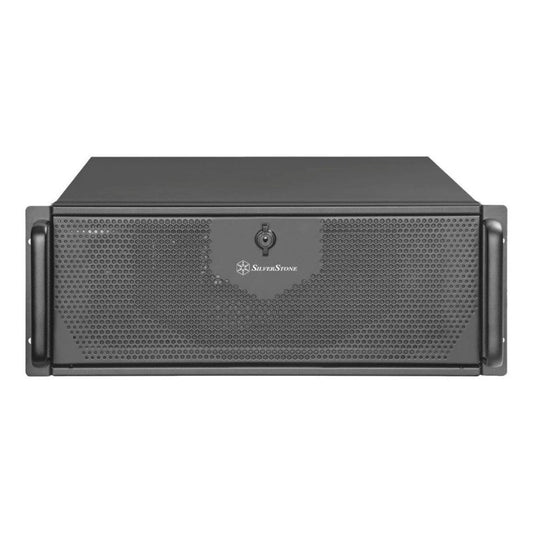
 CoreAI Rack — 2 × RTX 5090 (64 GB)4U rack: consultant teams, parallel transcription and indexing.
€11,221
Pro AI Ultra — Threadripper PRO96 GB VRAM ECC, up to 2 TB RAM: very large talent pools, continuous reliability.
€20,213
CoreAI 128 Rack — 2 × RTX 6000 (192 GB ECC)HR groups and large organizations: dozens of users, 24/7 availability.
€27,980
CoreAI Rack — 2 × RTX 5090 (64 GB)4U rack: consultant teams, parallel transcription and indexing.
€11,221
Pro AI Ultra — Threadripper PRO96 GB VRAM ECC, up to 2 TB RAM: very large talent pools, continuous reliability.
€20,213
CoreAI 128 Rack — 2 × RTX 6000 (192 GB ECC)HR groups and large organizations: dozens of users, 24/7 availability.
€27,980
All these machines are hand-assembled in Auriol (13390), fully configurable via the online configurator or upon request at contact@radiancesystems.eu, and delivered with the AI environment pre-installed: language model, chat interface, local transcription, and optional document indexing.
This article presents general guidelines and does not constitute legal advice. As recruitment is an area heavily regulated by GDPR, labor law, and European AI regulations, it is recommended to have your system validated by specialized counsel and documented in your processing register. Radiance Systems provides hardware and technical support; compliance analysis is your responsibility and that of your advisors.