Local AI Station with integrated RAG: your documents searchable out of the box
Imagine an AI that already knows your documents. You ask a question about a contract, a report, an internal procedure — and it answers, citing your own files, without anything ever leaving your office. This is what RAG makes possible. And on our workstations, it can be delivered ready-to-use: zero configuration, your documents searchable right out of the box.
The problem RAG solves
An AI model, no matter how powerful, doesn't know your documents. It was trained on general data, not on your contracts, files, or internal documentation.
The result: if you ask it a specific question about your business, it will improvise, or it will invent. This is the famous "hallucination." Unusable for serious work.
Without RAG
"What does clause 4 of my standard contract say?" The AI has never seen it. It answers vaguely or invents a plausible but false clause.
With RAG
The same question. The AI finds your contract, reads clause 4, and answers by quoting the exact text. Reliable, verifiable, based on your documents.
RAG, simply explained
RAG stands for "Retrieval Augmented Generation." The principle is simple: instead of relying solely on the model's memory, we give it access to your documents at the moment it responds.
Concretely, your files are chunked, indexed, and stored in a specialized database. When you ask a question, the system retrieves the relevant passages and provides them to the model, which then drafts a response based on your actual data.
You upload
PDF, Word, Excel, text: your documents are imported onto the machine.
The machine indexes
Documents are chunked and indexed locally, only once.
You query
You ask your questions in natural language; the AI answers by citing your files.
Why "zero configuration" changes everything
Setting up RAG yourself is not trivial. You need to choose an embedding model, a vector database, configure document chunking, connect everything to a language model, and then to an interface. Each step is a point of friction, and a source of silent errors.
For a professional whose job is not IT, this is a major obstacle. Many local AI projects stop there.
Who benefits from local RAG
- Lawyers and notaries: query a database of contracts, case law, and templates, while respecting professional secrecy.
- Doctors: retrieve information from protocols and recommendations, without exposing patient data.
- Accountants: query doctrine, internal procedures, and files, keeping everything local.
- Design offices and engineers: search through standards, specifications, and voluminous technical reports.
- Businesses: provide their teams with an AI that knows internal documentation, procedures, and history.
- Researchers: query a library of articles and notes in natural language.
RAG as an option on all our AI workstations
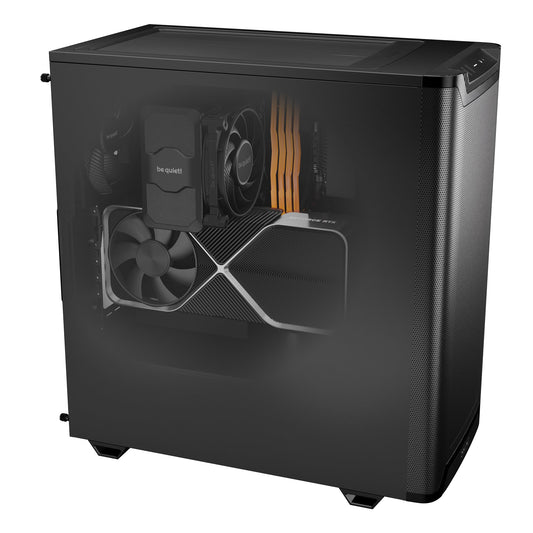
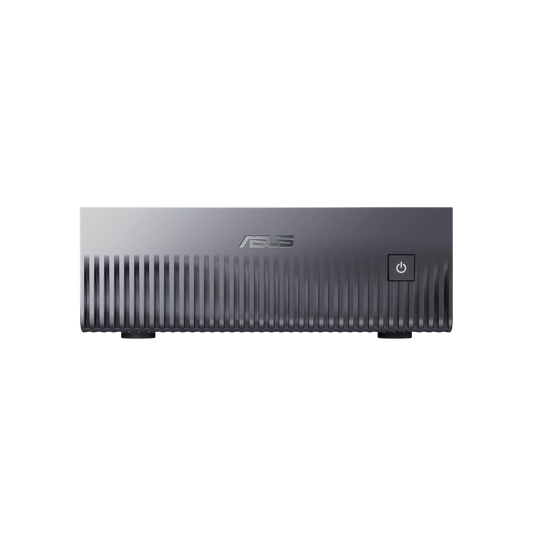
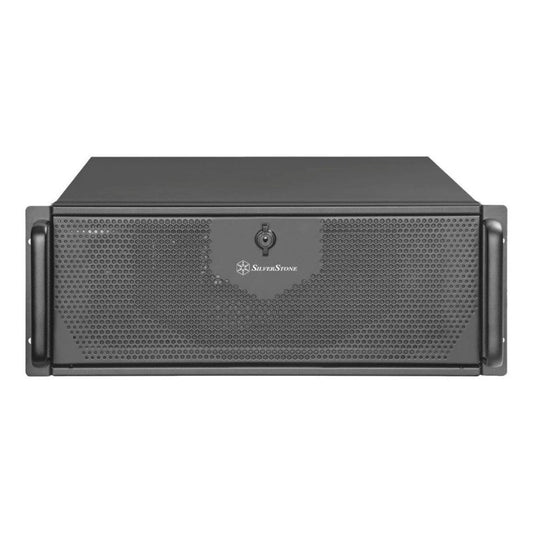
The RAG option is available on all our AI workstations, from the CoreAI 16 to the rack server. You can add it in two ways: directly from the online configurator on the product page, or via a custom quote if you have a specific need (large document volume, specific formats, multiple separate databases, multi-user access).
Describe your documents and your usage, and we will configure the appropriate RAG before shipment. Write to contact@radiancesystems.eu or use the quote request form on the website.
What the RAG option includes
- A language model adapted to your use, installed and ready.
- A local indexing engine to transform your documents into a searchable database.
- A document database that remains entirely on the machine.
- A chat interface accessible from a browser, like ChatGPT.
- Support for common formats: PDF, Word, Excel, text.
- A getting started guide for adding your documents and asking your first questions.
Which workstation for local RAG
RAG works on all our workstations. The choice mainly depends on the volume of documents and the number of users. The larger the database and the more demanding the models, the more VRAM and RAM matter.
For large enterprises and multi-user access
When RAG needs to serve many employees simultaneously, on voluminous document bases, a high-end server is essential. These configurations offer the VRAM, power, and reliability necessary to run large models and respond to multiple users at the same time, without slowdown.
Frequently Asked Questions
What is a local AI workstation with integrated RAG?
It's a machine that runs AI locally and comes with a pre-installed and configured RAG system. You upload your documents, and the AI can query them in natural language, without technical configuration and without any data leaving the machine.
Is RAG included by default?
RAG is available as an option on all our AI workstations. You can add it from the online configurator on the product page, or via a custom quote for specific needs. We will then configure the entire chain before shipment.
What document formats are supported?
Common formats: PDF, Word, Excel, and text. You can import contracts, reports, procedures, knowledge bases. The system indexes them locally, only once, and then you query them.
Do my documents remain confidential?
Yes, entirely. With local RAG, indexing and querying are done on your machine. No documents are sent to an external server. This makes this solution suitable for professions subject to secrecy and GDPR.
Do I need technical skills to use it?
No. With the ready-to-use RAG option, everything is pre-installed. The interface resembles a classic chat tool. You add your documents and ask your questions, without any command lines.
Can the document base be updated?
Yes. You can add new documents at any time; they are indexed and become searchable. The database evolves with your activity.
Which machine should I choose for local RAG?
For individual use on a common database, the CoreAI 16 (starting from €1,703) is suitable. For large volumes or shared team access, the CoreAI 64 or the GB10 server are more appropriate. RAG remains available as an option on each.