PC for local Hermes AI agent: model, context, and VRAM
Most AI tools forget everything as soon as you close the window. Hermes, Nous Research's open-source autonomous agent, does the opposite: it remembers, learns from each task, and improves over time. And it can run entirely on your own machine, without an API key, without the cloud, without per-token costs.
Running an AI agent locally is completely different from running a simple chatbot. An agent strings together dozens of steps, calls tools, reads results, decides on the next action, and keeps all this context in memory throughout the session. This imposes precise hardware constraints, often misunderstood.
This guide explains what the Hermes agent is, why context is the real determining factor, which model to pair with it, and which machine to choose to run it smoothly at home.
What exactly is Hermes?
We need to distinguish between two things that share the same name, and are often confused.
On one hand, there is the Hermes Agent framework: an open-source autonomous agent, under MIT license, developed by Nous Research. This is the software that orchestrates tasks, memory, and tools. On the other hand, there are the Hermes models (the Hermes 4 series): language models refined by the same team, specifically for agentic behavior.
The key point: the Hermes framework is model-independent. It works with any engine exposing an API in OpenAI format. So you can power it with a Hermes model, but also with Qwen, Gemma, or any other high-performing local model.
What the Hermes framework can do
Persistent memory
Hermes retains context between sessions. It doesn't start from scratch every time: it remembers your tasks, preferences, and what it has already accomplished.
Over 70 built-in skills
Web search, file manipulation, code execution, message sending: Hermes includes dozens of ready-to-use tools, endlessly extensible.
Self-improvement
From successful tasks, Hermes creates reusable skill cards, stored in Markdown, and reloads them when a similar situation arises. It regularly self-evaluates.
Scheduled automations
Hermes can execute recurring tasks according to a schedule: monitoring, reports, surveillance, without your intervention.
Messaging connections
Telegram, Discord, Slack, WhatsApp, Signal, email: you control your agent from your usual tools, and it responds to you wherever you are.
Model independent
Any OpenAI-compatible engine will do. The learning loop works identically with a local model on your machine.
The real determining factor: context, not model size
This is the most common mistake when sizing a machine for an agent. We first think about the model size. In reality, for an agent, it's the context window that drives memory requirements.
Hermes consumes context aggressively. Each tool call, each observed result, each reasoning step accumulates in the context. Official documentation mandates a minimum of 64,000 tokens, and models with smaller windows are simply rejected at startup.
Concretely, a model that fits in 8 GB for simple chat might require 12 GB or more once the 64K window is activated. And the more margin you want for multi-step reasoning (128K and beyond), the more VRAM increases.
Which model to pair with Hermes locally
The number one criterion for an agent is not the model's general knowledge, but the reliability of tool-calling: its ability to call the right tools, read responses, and not get lost in long loops. Here are the best choices in 2026, by VRAM budget.
| VRAM Budget | Recommended Model | Why | 64K Context |
|---|---|---|---|
| 8 GB | Qwen3 8B | Best-in-class tool-calling | 10 to 12 GB, tight |
| 16 GB | Qwen 3.5 / 3.6 27B | Reliable tool-calling, good reasoning | Comfortable |
| 16 GB | Gemma 4 26B MoE | Best speed-quality balance | Comfortable |
| 24 GB | Hermes 4.3 36B | Agent-tuned, neutral, up to 512K context | Ample margin |
| 24 GB | Hermes 4 35B-A3B (MoE) | Sustained a 100-step task without drifting | 128K possible |
Installing Hermes locally, step by step
On a machine equipped with a recent NVIDIA card, the process is straightforward. Hermes relies on Ollama as a local inference engine.
- Install Ollama (recent version) and download the target model.
- Configure the model with a context window of at least 64K tokens.
- Install the Hermes Agent framework (recent Python required).
- Point Hermes to your local Ollama instance (OpenAI-compatible endpoint).
- Connect your messaging apps (Telegram, Discord, email) and launch your first task.
# Example: prepare a 27B model with 64K context under Ollama
ollama pull qwen3.6:27b

# Create a variant with extended context for Hermes
cat > Modelfile <<'EOF'
FROM qwen3.6:27b
PARAMETER num_ctx 65536
PARAMETER temperature 0.6
PARAMETER top_p 0.95
EOF
ollama create qwen3.6-agent -f Modelfile

# Hermes then points to http://localhost:11434/v1
Why run your agent locally instead of in the cloud
An autonomous agent connected to your files, messages, and tools inherently handles sensitive data. Running it locally offers decisive advantages.
- Confidentiality. Your data, files, and conversations never leave your machine.
- Zero usage cost. An agent that runs continuously and chains tasks would be expensive via API. Locally, usage is unlimited, with no per-token billing.
- Availability. No quotas, no request limits, no service interruptions from the provider side.
- Total control. You choose the model, tools, accessible data, and you maintain control over the entire environment.
- Continuous operation. A local agent can run day and night, for monitoring or scheduled automations, with no extra cost.
Which machine for a local Hermes agent
Proper sizing depends on the target model and desired context window. Remember: the 64K, or even 128K, context is the real driver of VRAM needs. Here are our adapted stations, assembled in Auriol (13390) and delivered throughout the EU, with Ollama and the agent environment pre-configured upon request.
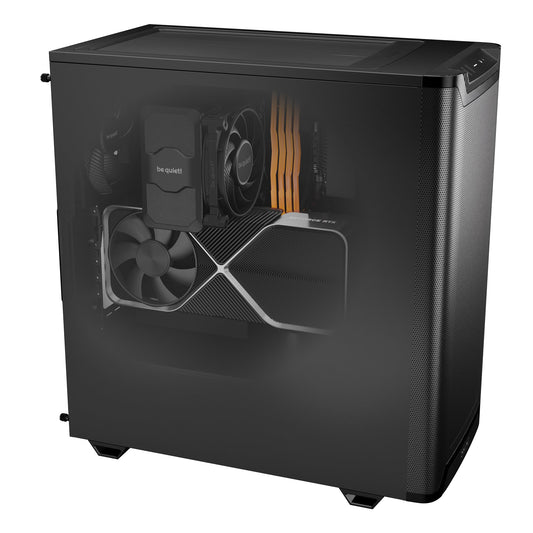
CoreAI 16 — RTX 5060 Ti 16 GBHermes + 27B model in 64K. The ideal entry point. 1 703 €
CoreAI 32 — RTX 5070 Ti 16 GBResponsive agent, comfortable context, Ryzen 9 for tool-use. 2 442 €
CoreAI 64 — RTX 5090 32 GBDedicated Hermes 4 models, 128K context, long agent loops. 6 042 €
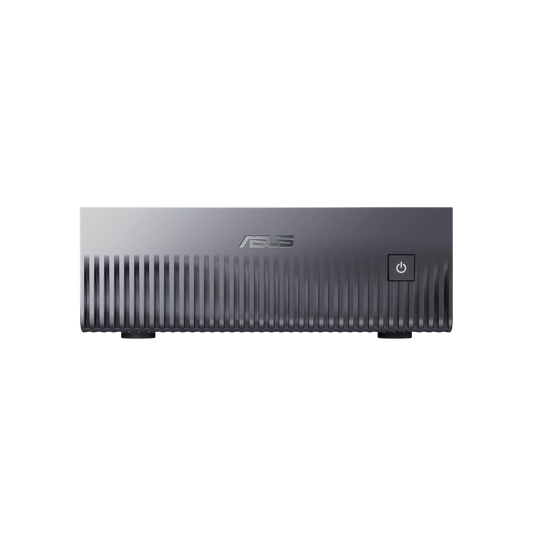
NVIDIA GB10 AI Mini ServerAgent in continuous 24/7 operation, very long context, 128 GB unified. 3 999 €
In brief
Is Hermes Agent free?
Yes, open source under MIT license. Ollama and open models (Qwen, Gemma, Hermes) are also free. The only costs are hardware and electricity.
What is the real sizing factor?
The context window. Hermes requires at least 64K tokens, which drives up VRAM much more than model size alone.
What is the minimum VRAM?
8 GB for an 8B model with 64K (tight), 16 GB for a comfortable 27B model, 24 to 32 GB for dedicated Hermes 4 models and 128K context.
Which model to choose with Hermes?
To start, a 27B like Qwen 3.5/3.6 on 16 GB. For maximum reliability on long loops, a dense model rather than an MoE. For more advanced use, dedicated Hermes 4 models.
Is an internet connection required?
No for inference: everything runs locally. A connection is only useful for skills that query the web, if you activate them.
Can it run continuously?
Yes. A local agent can operate day and night for monitoring and automations. The GB10 mini-server is designed for this type of continuous use.