Mac Studio vs. RTX PC for Local AI: The Real 2026 Comparison
It's the hottest debate in local AI: Mac Studio with its giant unified memory, or a PC equipped with an RTX and its brutal throughput? Both sides have valid points. Here's the match, round by round, with verified figures and firm verdicts, including those that aren't convenient for us.
Before the bell rings, an essential key to understanding: in text generation, speed is dictated by memory bandwidth, not by brute computational power. For each token produced, the entire model is re-read from memory. Tokens per second ≈ bandwidth divided by model size. Keep this formula in mind: it explains almost all the verdicts that follow.
The match, round by round
Round 1 — Pure Speed (models up to 32 GB)
PC RTX, by farThe RTX 5090 boasts 1,792 GB/s of bandwidth, compared to 546 GB/s for the M4 Max and 819 GB/s for the M3 Ultra. For models that fit within its 32 GB, it generates 3 to 4 times more tokens per second than a Mac Studio: we measure beyond 200 tok/s on 8B models, approximately 50 to 65 tok/s on dense 30B models. For interactive uses — chat, code assistant, agents — the difference is felt with every response.
Round 2 — Memory Capacity (70B models and above)
Mac StudioHonest verdict: a 70B model in Q4 weighs about 40 GB. It does not fit in the 32 GB of an RTX 5090. The card must then spill over into system RAM, and speed collapses to an unusable 1 to 3 tok/s. A 128 GB Mac Studio loads the entire model and runs it at 8-11 tok/s: slow, but functional. For very large models in single-user mode on a controlled budget, the Mac scores the point.
Nuance on the PC side: this ceiling is for a single consumer card. An RTX 6000 Blackwell (96 GB) or a dual-GPU setup eliminates the limit at a higher budget. And the NVIDIA GB10 mini-server offers 128 GB unified memory on the CUDA side, we'll come back to that.
Round 3 — Context Reading (agents, RAG, large documents)
PC RTXWe always forget: before generating, the model must read your prompt, and this phase depends on computational power. This is the Achilles' heel of Apple Silicon: the Mac generates creditably, but ingests long contexts much more slowly. For an agent that re-reads thousands of tokens at each step, RAG on large documents, or a code assistant that swallows an entire codebase, the NVIDIA advantage is clear and compounds with each iteration.
Round 4 — Multiple Simultaneous Users
PC RTXServing a team changes the game: requests must be processed in parallel. The NVIDIA GPU architecture absorbs concurrent streams much better than Apple's unified memory, which does not scale well in this scenario. The measured difference reaches 1.5 to 2 times in multi-user throughput. For an enterprise server, the question is quickly settled.
Round 5 — Image and Video Generation
PC RTX, no debateFlows, video models, ComfyUI, LoRA, TensorRT: the entire AI visual creation ecosystem is built CUDA first. Many tools run poorly or not at all on Mac, and rendering times are incomparably longer. If your local AI includes image or video, there is no debate.
Round 6 — Fine-tuning and Training
PC RTXPyTorch, training libraries, LoRA/QLoRA techniques: the tooling primarily targets CUDA. Seriously fine-tuning a model on Mac remains marginal and slow. As soon as you want to adapt a model to your data, an NVIDIA PC is the only viable path.
Round 7 — Power Consumption, Noise, Footprint
Mac StudioSecond point honestly conceded: a Mac Studio operates under 100 W, almost silently, in a tiny enclosure. A single RTX 5090 can draw 575 W. For a machine running continuously, electricity bills and acoustics favor Apple. However, it should be noted that a well-designed PC with adequate ventilation and a suitable case remains discreet in real use, and the GB10 mini-server (approx. 240 W, 15 cm format) falls into the same category of energy efficiency.
Round 8 — Scalability and Repairability
PC RTXA Mac Studio is ordered fixed: soldered memory, no possible expansion, requiring resale or repurchase to upgrade. A PC can grow: more RAM, more storage, a second card, a GPU replaced when a more powerful generation comes out. For an investment of several thousand euros intended to last, this is foundational. Let's add a point of context: Apple has removed the highest capacity M3 Ultra configurations from its catalog, and the M4 Ultra never saw the light of day. Apple's memory roadmap is not controllable, but a modular PC's is.
The verdict by profile
Our machines in this comparison
All assembled by hand in Auriol (13390), fully configurable via the online configurator or by quote (contact@radiancesystems.eu), delivered ready for use with the AI environment pre-installed upon request.
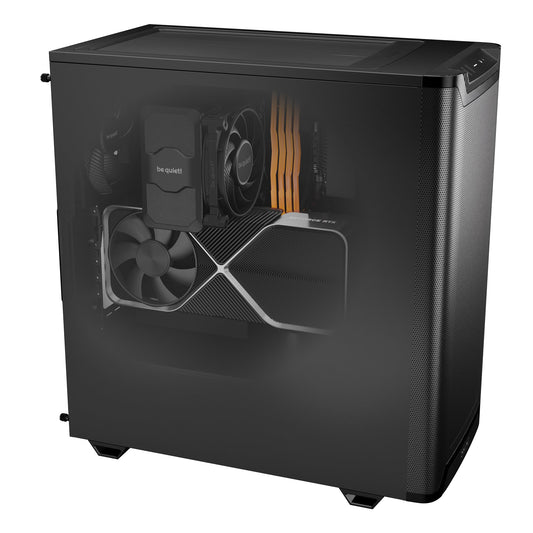
CoreAI 64 — RTX 5090 32 GBThe champion of the match: 1,792 GB/s, chat, agents, image and video. €6,042
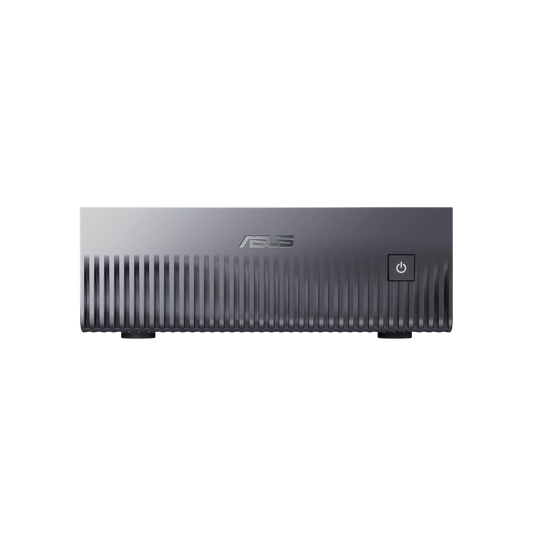
NVIDIA GB10 AI Mini Server128 GB unified + CUDA: the direct answer to the Mac argument. €3,999
CoreAI 16 — RTX 5060 Ti 16 GBThe entry-level CUDA: fluid 14B models, well below the price of a Mac Studio. €1,703
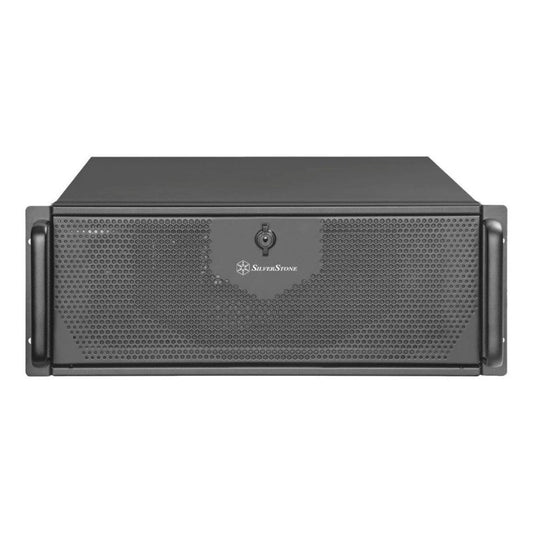
CoreAI 128 Rack — 2 × RTX 6000 (192 GB ECC)When you need capacity AND speed: 70B+ at full bandwidth. €27,980
In brief
Mac Studio or PC RTX for local AI?
PC RTX for speed (3 to 4× more tokens/s on models that fit in VRAM), agents, multi-user, image, video, and fine-tuning. Mac Studio for running very large models solo, in silence, if speed is not critical.
Why is the RTX 5090 faster despite less memory?
Because text generation depends on bandwidth: 1,792 GB/s compared to 546 to 819 GB/s on the Mac Studio side. Each token re-reads the entire model from memory.
Does a 70B model run on an RTX 5090?
Not comfortably: ~40 GB in Q4 for 32 GB of VRAM. You need either a 96 GB card (RTX 6000), a dual-GPU setup, or 128 GB unified memory (GB10 or Mac Studio).
Is there an option with large unified memory on the NVIDIA side?
Yes: the GB10 mini-server, 128 GB unified with the complete CUDA ecosystem, about 240 W, compact format.