Local AI for Real Estate Agencies: listings, appraisals, and client files

In a real estate agency, time isn't lost on viewings or negotiations. It's lost on everything else: drafting twenty similar listings, reformatting descriptions, preparing sales files, following up, answering the same questions, finding information in a mandate signed eight months ago.
This is exactly what local AI can absorb. And because an agency handles highly personal data — family situations, incomes, borrowing capacity, divorce or inheritance plans — doing it locally rather than online is not a minor detail.
Let's start with the most telling example: a listing, before and after.
A listing, before and after
"2-bed apt 68m2 2nd floor with lift. Fitted kitchen, living room, 2 bedrooms, bathroom, separate WC. Balcony. Cellar. Parking. Close to shops and schools. EPC D. Co-ownership 42 lots, charges €120/month. Price €249000 agency fees incl."
"On the second floor with a lift, this 68 m² two-bedroom apartment first captivates with its brightness and balcony, oriented to enjoy the late afternoons.
The living space is organized around a living room open to a fully equipped kitchen. The two quiet bedrooms complete a well-distributed layout, with a bathroom and separate WC.
A cellar and a private parking space complete the property. Shops and schools are just a few minutes' walk away. Co-ownership of 42 lots, charges of €120 per month, EPC rated D. Price: €249,000 agency fees included."
Same property, same information, no invention. Simply a formatting that makes you want to click, produced in a few seconds, in the tone defined by the agency. Multiply this by the number of listings published each month, and you can measure the gain.
A typical week in an equipped agency
This week's listings
Six new mandates. Drafts become publishable listings, adapted for the website, portals, and social media.
Appraisal preparation
AI synthesizes collected comparable properties, structures the appraisal report, and prepares the arguments for the appointment.
Viewing reports
Notes dictated after each viewing become written feedback to the seller, personalized and sent the same day.
Files and documents
Completeness check of a sales file, summary of an 80-page co-ownership regulation, extraction of key points.
Follow-ups and tracking
Drafting buyer and seller follow-ups, weekly mandate updates, preparation for next week's appointments.
None of these tasks are complex. All are time-consuming. This is precisely the type of work that local AI handles best, without ever replacing what makes the job unique: local market knowledge, seller relationships, and negotiation.
The three areas where agencies gain the most

Listings, appraisals, files: three volumes of text that local AI processes in minutes.
1. Listings and content production
This is the most immediate gain. From a technical draft, AI produces a structured listing, a short version for portals, a hook for social media, and a translation if you work with international clients.
The strength of local AI: it learns your agency's tone. By giving it access to your best past listings, it replicates your style rather than a generic, easily recognizable tone.
2. Appraisal preparation
Let's be precise on this point: generative AI does not set a price. It does not have access to local transaction data and does not replace your market knowledge or notary databases.
What it does, however, is structure all the surrounding work: synthesizing comparable properties you've gathered, drafting the appraisal report in a professional format, preparing the presentation arguments for the seller, and anticipating their objections. The figure remains yours; the formatting and argumentation are accelerated.
3. Client files and documentation
A co-ownership regulation is often eighty pages long. A global technical diagnosis, even more. Local AI reads them in minutes and answers your specific questions: what are the usage restrictions? Are there voted works not yet called? What servitudes encumber the lot?
With an indexed documentation base — mandates, meeting minutes, correspondence — you can query the agency's history in natural language rather than searching through folders. This is RAG, and it's often the usage that agencies end up preferring.
Why local instead of online
A real estate agency doesn't just handle property descriptions. It holds family situations, incomes, financing plans, and sometimes painful reasons for selling — separation, inheritance, financial difficulty. This is personal data under GDPR, and some of it is frankly socially sensitive.
Transmitting it to an online AI service means entrusting it to a subcontractor, often outside Europe, with the resulting transparency and contractual obligations. Locally, the question doesn't arise: nothing leaves the agency.
Add the economic argument: no monthly subscription per employee, no usage-based billing. An agency that writes a lot of content quickly amortizes a single machine shared by the entire team.
The hardware: our full range
An agency's needs are moderate in raw computation but significant in document volume. The choice mainly depends on the number of connected collaborators and the size of the base to be indexed.
Individual workstations and small agencies
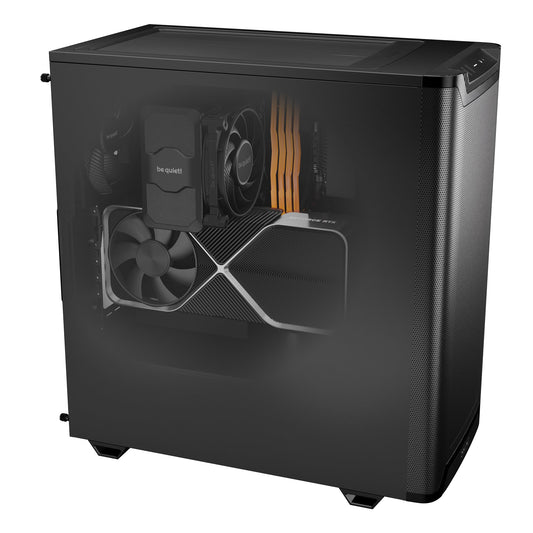
 CoreAI 16 — RTX 5060 Ti 16 GBIndependent agent or small agency: listings, reports, follow-ups.
€1,703
CoreAI 32 — RTX 5070 Ti 16 GBHigh-volume agency: indexing of mandates and documentation.
€2,442
CoreAI 64 — RTX 5090 32 GBMaximum writing quality, large document processing, visual generation.
€6,042
CoreAI 16 — RTX 5060 Ti 16 GBIndependent agent or small agency: listings, reports, follow-ups.
€1,703
CoreAI 32 — RTX 5070 Ti 16 GBHigh-volume agency: indexing of mandates and documentation.
€2,442
CoreAI 64 — RTX 5090 32 GBMaximum writing quality, large document processing, visual generation.
€6,042
Server shared by the agency
 Mini AI Server NVIDIA GB10128 GB unified: entire team connected, indexed common base, silent in open-plan offices.
€3,999
Mini AI Server NVIDIA GB10128 GB unified: entire team connected, indexed common base, silent in open-plan offices.
€3,999
Agency networks and groups
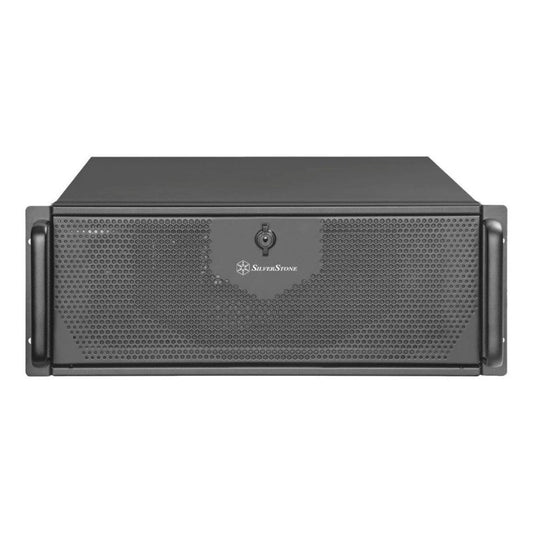
 CoreAI Rack — 2 × RTX 5090 (64 GB)4U Rack: multiple network agencies connected to the same server.
€11,221
Pro AI Ultra — Threadripper PRO96 GB ECC VRAM: very large document bases, continuous operation.
€20,213
CoreAI 128 Rack — 2 × RTX 6000 (192 GB ECC)Large networks: dozens of simultaneous users, 24/7 availability.
€27,980
CoreAI Rack — 2 × RTX 5090 (64 GB)4U Rack: multiple network agencies connected to the same server.
€11,221
Pro AI Ultra — Threadripper PRO96 GB ECC VRAM: very large document bases, continuous operation.
€20,213
CoreAI 128 Rack — 2 × RTX 6000 (192 GB ECC)Large networks: dozens of simultaneous users, 24/7 availability.
€27,980
All these machines are hand-assembled in Auriol (13390), fully configurable via the online configurator or on quote at contact@radiancesystems.eu, and delivered with the AI environment pre-installed: language model, browser-accessible chat interface, local transcription and optional document indexing.
Where to start
There's no need to change everything at once. The method that works best in an agency is in three stages.
Start with listings. This is the simplest, most visible use, and one that convinces the team in a week. Give the model about ten of your best listings so it can absorb the agency's tone.
Then add dictated viewing reports. Negotiators save an hour a day, and sellers receive feedback the same day — which significantly improves the relationship during the mandate period.
Finally, implement document indexing. This is the longest project to set up, but it permanently transforms the agency: the entire memory of the structure becomes queryable in a single sentence.
Helpful reminder: AI prepares and drafts, the agency validates. Regulatory mentions in listings, surface areas, diagnostics, and co-ownership information are your professional responsibility and must be verified before any publication. As with all personal data processing, remember to document your approach in your GDPR register.